Showing posts with label gender. Show all posts

Friday, 30 May 2014

Men and women: towards unity in diversity

Chagall adam and eve

[Warning: Long read.]

My personal experience of having many good friends among both men and women is leading me to believe that differences between the two genders are real, but that their nature is very complex and that any attempt to characterize one versus the other ends up in traits that span some of both genders’ populations. No matter what profile is devised with the intention to characterize what a man’s trademark traits are, there will be women I know who excel at some of them, and, equally, I can think of men who excel at traits that would be attributed to the archetypal woman.

Claims that women are more intuitive while men are more rational have always struck me as simplistic and reductive in terms of their predictive capacity in the face of meeting a new person of either gender, and - more importantly, I have found them to be unhelpful, or even obstructive, when it comes to building relationships. Yet, the view of resolving the question about the differences between men and women by means of two list of ‘typical’ traits is very popular, as can also be seen from best-sellers like “Men are from Mars, Women are from Venus” (the first book I read that compelled me to write a review on Amazon :).

To counter this trend, I would like to sketch out my understanding of how men and women compare, and do so from two perspectives: the first one being science (both neuroscience and psychology) and the second one religion (specifically Christianity, and even more specifically Catholic exegesis, the Theology of the Body of St. John Paul II and the intellectual visions of the Servant of God, Chiara Lubich).

From the perspective of science, there is a growing body of work on quantifying both the neurological/physiological and psychological differences between men and women, where certain physical as well as behavioral differences have been measured repeatedly and for which evidence is mounting.

On the neurological and physiological side, there is strong evidence (obtained by a team from Oxford and Cambridge, who pooled together 126 studies, involving 43 000 subjects) to show that the brains of men are between 8% and 13% larger in volume than those of women. There is also evidence for there being significant differences between the relative volumes and densities of different regions in the brain between men and women. A recent example here is the work of Nopoulos et al. from the University of Iowa, who used functional Magnetic Resonance Imaging (fMRI) to study the ventral prefrontal cortex (VPC), a region involved in social cognition and interpersonal judgment. The findings, based on 30 men and 30 women, showed a relatively larger volume of this region in women, by 10%. In other words, relative to the total volume of a brain, the VPC region is 10% larger in women. Finally, there are not only volumetric differences between the brains of men and women, but also morphological ones. Here the most well-known, recent study is by Ingalhalikar et al., where the brains of 949 subjects (428 male and 521 female) were studied in terms of the nature of neural connections (connectome maps) between and within brain hemispheres (using diffusion tensor imaging). The results showed a systematic difference where male brains displayed a greater degree of intra-hemispherical synaptic connections (see top of following figure), while female brains had more prevalent inter-hemispherical links (see bottom of following figure). Interestingly, the authors of this study refer to the differences between the connectome maps of males and females as being a “complementarity” that makes them particularly suitable for collaboration ...

Penn medicine

While there is strong evidence for systematic physiological differences between male and female brains, the question of what their consequences are remains far less clearly understood. E.g., taking the question of intelligence, there are studies whose results support all three of the possible outcomes: that there is no statistically significant difference, that men are more intelligent, or that women are more intelligent on average (e.g., see pp. 72 of the following paper). Even in the cases where a difference is shown, it tends to be small: 2-4 points in terms of the well known IQ test, and whether it is men or women who come out ahead depends on the specific test used. E.g., in a study involving 6780 subjects from Brazil, women came out ahead by 2 IQ points using Cambraia’s Attention Test, while men did better in Raven’s Standard Progressive Matrices test - by 1.8 IQ points. Similarly the behavioral consequences, from the perspective of differences between the sexes, of the VPC differences measured by Nopoulos et al., present a complex picture. There, no significant differences were found between men and women in terms of performing the Interpersonal Perception Task, which tests a subject’s ability to understand different types of social interaction. However, when the subjects were asked to complete a Personal Attributes Questionnaire (answering questions that lead to the subject’s self-perception in terms of two scales: “instrumentality” and “expressivity”, which are commonly taken to stand for masculinity and femininity and are used as a measure of gender identity), the resulting scores displayed strong correlation with the Interpersonal Perception Task outcomes.

The point of the above examples taken from recent findings in neuroscience and psychology, from studies that explore the differences between men and women, is to illustrate the complexity of the results obtained to date. On the one hand there is strong evidence for biological differences between male and female subjects, while on the other hand the specific nature of the differences and their impact on psychological traits or inclinations is complex and does not neatly divide along lines of a subject’s sex. While nature differs on average, an individual’s characteristics make them different from their sex’s average, with nurture and society further contributing to there being a continuum of states instead of a binary categorization of abilities, preferences, or traits. In my opinion, the psychology of personality, as opposed to that of gender, is a better means for understanding how one individual may differ from another in terms of their preferences and inclinations, which in turn can facilitate building mutually-fulfilling relationships.1

Turning to how the differences between men and women are understood in the context of Christianity, I would like to highlight three perspectives, as already mentioned at the beginning of this post.

First, there is St. John Paul II’s Theology of the Body, as set out in his “Men and Women He Created Them,” which I have already written about at length here. The only insight I’d like to point to here is John Paul II’s insistence on men and women being created “in the image of God” intrinsically referring to the communion of Persons in the Trinity. He makes this clear by saying that “man2 became the image of God not only through his own humanity, but also through the communion of persons, which man and woman form from the very beginning.” And it is in this context that the differences between men and women have a specific purpose, which is that these “two reciprocally completing ways of “being a body” [… are] complementary dimensions of self-knowledge and self-determination.” This in turn leads John Paul II to saying that a person’s “sex expresses an ever-new surpassing of the limit of man’s solitude [… and] always implies that in a certain way one takes upon oneself the solitude of the body of the second “I” as one’s own.” Men and women are different and complementary, but in profound, existential ways rather than as reducible to a trivial set of typical features or traits.

Second, the New Testament is rich in portraying different roles played by men versus women in the context of Jesus’ mission on Earth. Here Damiano Marzotto’s “Pietro e Maddalena” (mentioned by Pope Francis as being on his reading list), does a superb job of analyzing what these roles are in the Gospels, as a first step towards understanding how women could play the prominent role that they need to have in the Church, which they lack today. Marzotto summarizes his findings by first pointing out a greater propensity in women for welcoming Jesus’ teaching and making themselves available for a deepening and contemplation of his message (with men then acting on what the women understood). Mary’s keeping the events surrounding Jesus’ birth and “reflecting on them in her heart” (Luke 2:19) illustrates this very clearly. This places women in a position of welcoming novelty, of taking risks and of stepping out of line - traits not commonly associated with women in first century Palestine. The women of the Gospel, while having some common features, very much break the mold of societal stereotypes - another argument against characterizing men and women by sets of static, opposed features. The second aspect that Marzotto identifies in the women of the Gospel is an ability to anticipate Jesus’ actions and to provoke him or the apostles to action. Mary’s intervention at the wedding in Cana (John 2:1-12), or Mary Magdalene going to the apostles after meeting the risen Christ (John 20:1-3) are good examples here. Finally, Marzotto also argues that women have been responsible for a broadening of Jesus’ mission, for a greater universality of who it is addressed to. Here the woman suffering from hemorrhage (Mark 5:25-34), the Samaritan woman (John 4:4-42), the Canaanite woman (Matthew 15:21-28), or the widow of Nain (Luke 7:11-17) are great examples.

Third, the Servant of God, Chiara Lubich, in her intellectual visions (like those of Sts. Teresa of Ávila and Ignatius) during the summer of 1949 (referred to as the Paradise ’49), prefigures St. John Paul II’s interpreting the relationship between men and women from the perspective of the Trinity. As Giuseppe Maria Zanghí puts it, “this means that a meeting between the two “differences” requires, in each one of the two, a fullness of being: their synthesis is possible [...] because, already before the two meet, each one of them is complete in themselves. Every form of weakness, every temptation of “subjection”, is overcome. [...] True unity between man and woman can be achieved if each of the two realities is fulfilled in itself.” During her visions in 1949, Lubich recounts the following insight:
“The perfect man has the woman in him: he contains in his strength all of feminine sweetness, in his directness all of a woman’s suppleness. His character is unitarian, closed and severe like unity. But, if he is perfect (unitarian), he contains in himself the Trinity, who is a woman that is all open, caressing, loving. So the woman too, if she is perfect, encloses her open character in self-restraint that is reminiscent of the Madonna. She is man. Trinity in Unity.” (Paradise ’49, 1319-1320)3
The relationship between men and women, as understood also by Lubich in her mystical vision, is one of unity in distinction and distinction in unity, which is love. To reduce it only to distinction, and to a simplistic binary one at that, is to deny the Trinitarian image in which both men and women were made, and it is also to distort the complex and deeply beautiful picture that science is in the process of understanding as we speak.

[UPDATE on 17 November 2014:] Today Pope Francis opened a symposium on precisely the subject of how men and women relate, entitled “The Complementarity of Man and Woman in Marriage,” during which he had the following to say about the nature of differences between the sexes:
“Christians find [the] deepest meaning [of complementarity] in the first Letter to the Corinthians where Saint Paul tells us that the Spirit has endowed each of us with different gifts so that-just as the human body’s members work together for the good of the whole-everyone’s gifts can work together for the benefit of each. (cf. 1 Cor. 12). To reflect upon “complementarity” is nothing less than to ponder the dynamic harmonies at the heart of all Creation. [...]

When we speak of complementarity between man and woman in this context, let us not confuse that term with the simplistic idea that all the roles and relations of the two sexes are fixed in a single, static pattern. Complementarity will take many forms as each man and woman brings his or her distinctive contributions to their marriage and to the formation of their children — his or her personal richness, personal charisma.”


1 But, we’ll have to leave that for another time ...
2 “Man” here meaning the human person (as is clear from the context of the original text).
3 Apologies for the crude translation, the Italian original can be found in Zanghí's “Leggendo un carisma” on pp. 149-150.

Monday, 27 January 2014

Gender

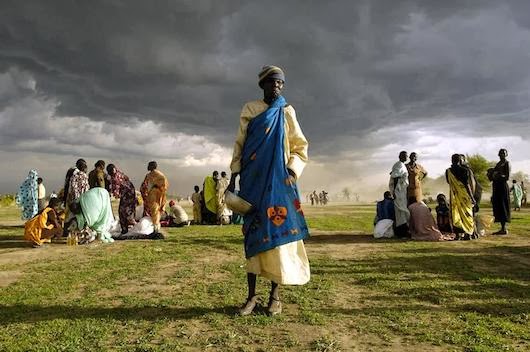
South Sudan Rain Clouds UN Photo

An easy way of making a Catholic gasp and recoil in horror these days is to utter the word “gender,”1 which in many cases is heard as being synonymous with “heretic.” Saying: “I work for gender equity,” is tantamount to admitting to drug dealing, human trafficking, or worse. What are “gender equity,” or the more widely used term “gender equality,” though? Here one of the best descriptions of it’s consequences - in my opinion - is the following:
“And what shall we say of the obstacles which in so many parts of the world still keep women from being fully integrated into social, political and economic life? [...] As far as personal rights are concerned, there is an urgent need to achieve real equality in every area: equal pay for equal work, protection for working mothers, fairness in career advancements, equality of spouses with regard to family rights and the recognition of everything that is part of the rights and duties of citizens in a democratic State.”
Oh, but this doesn’t sound despicable!? If anything, it seems like exactly what every Catholic ought to be (and very often is) striving for! So, where does the opposition to anything to do with “gender” come from?

Let’s take a couple of steps back and look at the concept in isolation. In terms of etymology, “gender” derives from the Latin “genus,” which in turn means “kind” or “type” and which has since antiquity (at least since as early as Protagoras in the 5th century BC) been employed in the context of grammar, resulting in a categorization of nouns into masculine, feminine and neuter. While the application of such categories to human identity, behavior and social roles has traces in the Middle Ages, it is only since the middle of the 20th century that the term is consistently used to refer to a person’s identity or social role, distinguishing between male and female (and more recently a growing list of other types too).

In other words, “gender” refers to whether one considers oneself male or female and/or whether one is considered male or female by society, with all the implications that such (self)categorization entails. It “refers to the economic, social and cultural attributes and opportunities associated with being male or female,” as the United Nations put it.

So far, “gender” sounds like a fairly uncontroversial concept: men and women see themselves as male or female, where their being male or female also has consequences socially, economically and culturally. The term allows for distinguishing between biological sex and it psychological and social consequences and allows for highlighting inequality for which society rather than physiology is accountable for.

To a Christian, who professes that every human being is made in the “Image of God,” inequality needs to be fundamentally abhorrent and equal dignity, opportunity, recognition, rights and respect be seen as an inherent good. If you are a Catholic and feel a bit squeamish about any use of the term “gender,” get over it. And next time someone tells you they work for “gender equality,” congratulate them and support them. Period. Women today are at a disadvantage around the world - in many cases shockingly and criminally so, purely by virtue of being women. Gender equity - the striving for fair treatment of men and women - is an intrinsic moral good that is every Christian’s duty and a direct consequence of Jesus’ commandment to “love your neighbor as yourself” (Matthew 22:39).

So, is the kerfuffle around the term “gender” all just some big mixup or exaggeration?

No.

There is another use of the concept of “gender,” where it becomes an ideology and where, I believe, it is distorted in ways that can lead to at least psychological harm. This ideology - “gender theory” - proceeds along the following lines: “Since gender is a social construct, and since I have self-determination, gender is not an intrinsic attribute of my self. Instead, it is something I “do” and I am free to choose arbitrarily. As a woman I am neither intrinsically female nor male. I become female or am made to behave according to female constraints that society imposes on me.” It is in this vein that Simone de Beauvoir says “one is not born a woman, one becomes so” (The Second Sex) or that Judith Butler declares that “[r]ather than ‘woman’ being something one is, it is something one does” (Gender Trouble). And it is this ideology that Benedict XVI decries and sums up by saying:
“People dispute the idea that they have a nature, given by their bodily identity, that serves as a defining element of the human being. [...] Man calls his nature into question. From now on he is merely spirit and will. [...] From now on there is only the abstract human being, who chooses for himself what his nature is to be.”
I believe that, in both of the above examples of gender theory statements, the motives for opposition to gender roles, as imposed by society and resulting in injustice, were positive. They were a revolt both against the misogynistic contortions of Freudian psychoanalysis, that posits female inferiority, and against social injustice perpetrated on women. The difficulty, to my mind, arrises neither from the well-justified analysis of social inequality, nor from the reactions against dubious models of female psychology. Instead, it lies with the conclusions drawn from them.2 The observation of unjust gender roles and models leads to their dissociation from sex, instead of to an attack on their injustice and a subsequent project for their rectification.

Instead of denying the link between the biological and the social, as tends to be the case with “gender theory” ideologies, I believe the answer lies in reforming unjust and inequality-fueling gender roles. Here, there are good examples of campaigns that foster awareness and work towards the changing of negative stereotypes, today imposing pressure both in peer groups and from the media. E.g., the UK-based “GREAT Initiative” has a “Great Men Value Women,” campaign where they work with teenage boys to challenge male stereotypes that foster gender inequality (e.g., being tough, even aggressive and not showing their feelings). Then there are: the “Men in Childcare” initiative, which promotes the involvement of men in childcare and related professions, one of the UN’s “Millennium Goals” focusing on gender equality, or the World Food Programme’s providing training sessions for fathers about maternal and child health and nutrition, just to name a few. These, to my mind, are pushing in the right direction. In contrast, the consequences of the sex-gender decoupling of “gender theory” range from the innocuous, albeit arguably exaggerated, protests against the ““pinkification” of girls’ toys” to the dramatically more worrying example of the raising of a boy as “gender neutral.”

Oh, and by the way, the opening quote of this post is from Blessed Pope John Paul II’s “Letter to women” (§4)...


1 Many thanks to my überbesties YYM and PM for their nihil obstats.
2 In many ways this reminds me of Marxism3 (and apologies in advance for the great simplification of critiquing it in a single sentence here), which correctly diagnosed the serious problem of social inequality, but which applied to it a non-remedy: class war. The problem still persists to this day, but it requires an actual solution, mindful of human dignity, instead.
3 No, not of Martin Parr this time either.

Friday, 25 January 2013

Man and woman: a communion of persons

Twoone

In a previous post (that I highly recommend if you’d like to get the most out of this one), I shared my notes on the first eight chapters of John Paul II’s “Man and Woman He Created Them.” There he presents an astonishing view of the human person, derived from the creation account of Genesis. It centers around his argument for the self-consciousness and self-determination of the human person, and, as their consequence, their relating to God as a partner. The human person is set against the background of man’s initial solitude, out of which the differentiation of the male and female sexes arises. In this post I would like to continue sharing my takeaways from John Paul II’s book, where the relationship between the “two ways in which [a] human being […] is a body” is further elaborated.

Here the narrative continues on from the “unity of two beings” established in chapter 8, and emphasizes the value of the human person to God (“God saw everything that he had made, and indeed, it was very good” Genesis 1:31) and of man and woman to each other, as “an overcoming of the frontier of solitude.” This original solitude of man is already an indication that man is made for woman and vice versa. The “existence of the person “for” the person1 […] is confirmed, in a negative sense, precisely by [man’s original] solitude.” Such being for each other results in the formation of a communion of persons, where it is the ““double solitude” of the man and the woman, […] which [gives] to both the possibility of being and existing in a particular reciprocity.” The human person’s being created “in the image of God” (Genesis 1:27) lets us deduce that “man became the image of God not only through his own humanity, but also through the communion of persons, which man and woman form from the very beginning.” This is beautifully summed up by John Paul II saying that “[m]an becomes an image of God not so much in the moment of solitude as in the moment of communion.” Man is “not only an image in which the solitude of one Person, who rules the world, mirrors itself, but also and essentially the image of an inscrutable divine communion of Persons.”

All I can say to that is: wow! The clarity of thought, the beauty of the universal image of the human person and its relationship with God that John Paul II presents here is astonishing and seems so fresh and open that I am lost for words!

Turning back to the human person, he extracts yet another profound realization from the Genesis account: “on the basis of the original and constitutive solitude of his being - man has been endowed with a deep unity between what is, humanly and through the body, male in him and what is, equally humanly and through the body, female in him.” The “twofold aspect of man’s somatic constitution” - masculinity and femininity – indicates “the new consciousness of the meaning of one’s body[, which is] reciprocal enrichment.” These “two reciprocally completing ways of “being a body” [… are] complementary dimensions of self-knowledge and self-determination.” It is important to note here that John Paul II does not refer to an individual, when he says “man” in the above quotes (i.e., he is not saying that a single person is constituted by masculine and feminine parts) and neither is he talking about a male human being. Instead, “man” refers to humanity, where human person have these two “ways of being” that have among them a deep unity. This becomes particularly clear also from the following passage, where he says that being male or female “is “constitutive for the person” (not only “an attribute of the person”) [… Man] is [deeply] constituted by the body as “he” or “she”.”

With the human person understood as above, the next step is to turn to the unity between male and female that Genesis expresses as: “the two will be one flesh” (2:24). This “is without doubt the unity that is expressed and realized in the conjugal act.” “When they unite with each other (in the conjugal act) so closely so as to become “one flesh,” man and woman rediscover every time and in a special way the mystery of creation, thus returning to the union in humanity (“flesh from my flesh and bone from my bones” [Genesis 2:23]) that allows them to recognize each other reciprocally.” “This means reliving in some way man’s original virginal value [… and for man and woman to discover] their own humanity, both in its original unity and in the duality of a mysterious reciprocal attraction.” “[S]ex expresses an ever-new surpassing of the limit of man’s solitude [… and] always implies that in a certain way one takes upon oneself the solitude of the body of the second “I” as one’s own.”

Finally, chapter 10 (yes, all of this is in only two, short chapters!), highlights the core importance of choice in becoming “one flesh” “While the man, by virtue of generation, belongs “by nature” to his father and mother, “he unites,” by contrast, with his wife (or she with her husband) by choice.” This choice, which is an “expression of self-determination” that is fundamental to the “structure” of the human person, “is what establishes the conjugal covenant between the persons, who become “one flesh” only based on [it].” “When both unite so intimately with each other that they become “one flesh,” their conjugal union presupposes a mature consciousness of the body.” The result is a new “discovery of the […] original consciousness of the unitive meaning of the body in its masculinity and femininity.”

OK, that’s about as much as I can try to cover in one go. John Paul II’s thought is intricate, dense (re-reading a good few times is a must) and has peculiarities of vocabulary (like all good, philosophically meaty texts), but the rewards are rich and will, at least for me, lead to many more re-reads and hopefully new insights in the future. Even the surface I managed to skim here presents the sexual relationship between man and woman as a mirror of the cosmic event of creation (in the rich depth that John Paul II has exposed in these first 10 chapters ), as a mirror of the innermost nature of God’s own Trinitarian life and as a mirror of the fundamental complementarity and reciprocity of human relationships. Consciousness, choice, bodiliness, solitude and a gratuitous giving of one’s self to another self are all weaved into a profoundly illuminating tapestry, which shows off the beauty of a positive, Christian understanding of humanity and sexuality.


1 Please, note that all italicized emphases are John Paul II’s own, from the original text.

Monday, 14 January 2013

Man and woman: the beginning

Woman

It has been a long time since I last read a text that filled me with excitement and admiration and lead me through a seemingly inexhaustible sequence of insights and profound realizations. The book I am talking about is John Paul II’s “Man and Woman He Created Them,” which presents his “Theology of the Body” - a term that I have heard mentioned on various blogs but that has meant little more to me than a buzz-word so far.

The book presents the content of a series of talks that Blessed John Paul II gave during his Wednesday general audiences between September 1979 and November 1984 (!) that closely track a manuscript he wrote before being elected pope. Instead of the usual pastoral material, typically presented at events like these, the first chapter already makes it crystal clear that the book is going to be technical and intellectually challenging material. To think that he shared it with the crowds who came to see him in Rome is astonishing to me by itself, as it is the polar opposite of the typical dumbing-down that so often informs pubic communication.

The starting point is the origin of the family in marriage, whose indissolubility Jesus categorically reaffirms when challenged by some Pharisees:
“Have you not read that from the beginning the Creator created them male and female and said, ‘For this reason a man will leave his father and his mother and unite with his wife, and the two will be one flesh’? So it is that they are no longer two, but one flesh. Therefore, what God has joined let man not separate.” (Matthew 19:4-6; emphasis by John Paul II)
Here John Paul II picks up on Jesus’ emphasis on “the beginning” and his quoting of verses from two separate chapters of Genesis. Instead of this passage from Matthew being only taken as a confirmation and reinforcement of the Genesis model of marriage, Jesus’ emphasis on “the beginning” triggers an analysis of the creation of humanity. In fact, John Paul II focuses on the specific features and complementary differences of the two Genesis accounts to look not only at the differences between male and female genders, but at key characteristics of what it means to be human.

The first account (which is chronologically more recent and which has more of a theological character) is that “God created man [hā’ādām, collective noun: “humanity”?] in his image, in the image of God he created him, man [zākār, male] and woman [neqēbāh, female] he created them.” (Genesis 1:27, John Paul II’s additions in []). In other words, the creation of man and woman is “a single act.” In contrast, in the second account (which is more ancient and has more of a mythical character), man’s creation (Genesis 2:5-7) precedes that of woman’s (Genesis 2:18-23). However, even here, the first human being is called “man” (’ādām), “while from the moment of the creation of the first woman, [Genesis] begins to call him “male,” îš, in relation to ’iššāh (“woman,” because she has been taken from the male = îš).”

While the above “single-act” creation of the sexes is an aspect of Genesis that I certainly was not aware of, the most impressive move in John Paul II’s analysis comes next and is the insight that the solitude of the pre–male-female differentiated “man,” - expressed in Genesis as “It is not good that the man should be alone” (2:18) - is a reference not only to an individual’s solitude (lacking a mate) but to a fundamental feature of every person’s nature. In Genesis, the first “man” is shown both as being separate from the rest of creation (being alone in spite of a multitude of other living beings already populating the world) and as searching for his identity (being asked by God to name “every living creature” but not “find[ing] a help similar to himself” (Genesis 2:19-20)).

This original solitude of the human person indicates self-consciousness and the commandment about not eating from the “tree of the knowledge of good and evil” introduces self-determination (free will) as a basic feature of humanity. These two together make the human person “created in the image of God” and a “partner of the Absolute.” Next, John Paul II argues that it is man’s (’ādām’s) body that is the source of his awareness of solitude. This body that could have made man place himself as equal among the other created bodies, instead gives him awareness of his otherness and solitude. This in turn makes it evident that “the “invisible” determines man more than the “visible”.”

Next, man’s body is also the means of his “cultivating the earth” (Genesis 2:5) and “subdu[ing] it” (1:28), as the Genesis account further states. As a result, the human body is not only involved in man’s awareness of his separateness from the rest of creation and his potential for self-determination, but also “permits him to be the author of genuinely human activity[, where] the body expresses the person.” The final ingredient that John Paul II identifies in the Genesis account is the introduction of the difference between death an immortality in the form of the mystery of the three of knowledge: “The LORD God gave the man this order: You are free to eat from any of the trees of the garden except the tree of knowledge of good and evil. From that tree you shall not eat; when you eat from it you shall die.” (Genesis 2:16-17).

With man’s features emerging as his self-consciousness, self-determination and, as their consequence, relating to God as a partner, John Paul II turns to taking a closer look at the meaning of the original unity of humanity. The starting point here is an argument for there being a distinction between “bodiliness and sexuality” whereby our being bodies is fundamental to the structure of our being personal subjects, even before differences between the male and female genders are considered. Being a body is fundamental to being human and is intrinsic to the nature of that humanity (as John Paul II argues above), while masculinity and femininity are “two ways in which [a] human being […] is a body.” These two ways of being human bodies – the “double unity as male and female” – are introduced as means of overcoming the solitude of the sexually undifferentiated human. From the Genesis account of how male and female are differentiated, John Paul II notes in particular two aspects: First, that the “second I” - the female - that emerges from the “torpor” of the undifferentiated man during which differentiation is created - is “also personal and equally related to the situation of original solitude.” Second, that man “shows joy and even exultation […] for the other human being, for the second “I”.”

The first 8 chapters, a high-level synthesis of which the above has attempted, take us to the point of the basic features of man and woman having been sketched out, which is then the starting point for looking at the nature of the marital relationship. What I found particularly impressive, beyond the actual content and the psychological and anthropological profile of the human person that John Paul II presents, is the method of analysis he applies to Genesis. Throughout this discourse he is very clear about considering that text to be of mythical character, which “does not refer to fictitious-fabulous content, but simply to an archaic way of expressing a deeper content.” And he goes on to say that “[w]ithout any difficulty, we discover that content under the stratum of the archaic narrative, truly marvelous in the quality and condensation of the truths contained there.” What a guy! While I certainly cannot echo the “without difficulty” qualifier, the marvelousness and “quality and condensation of the truths” that he manages to reveal in this ancient text is amazing. His approach strikes me as being categorically different both from a naive, literal reading of Genesis that leads some to highly irrational and a-scientific conclusions and from a superficial “this is just a story” approach that fails to uncover deeper meaning.