Friday, 24 June 2016

Zanghí: the person, an individual fulfilled

Klee person

930 words, 5 min read

The question of who I am is at the very heart of philosophy and a failure to answer it was presented by Socrates even as grounds for voiding the very value of his being, when he said his famous “The unexamined life is not worth living.” during the trial that lead to his being sentenced to death. A philosopher who has given this question some very careful and insightful thought is Giuseppe Maria Zanghí, who in his 1980 article entitled “A few thoughts on the person” has looked at the distinction between person and individual.

His starting point is the presentation is a key challenge that we face when attempting to subject the person to scientific enquiry:
“In the humanity common to all humans, the person is precisely that which is not in common, that which constitutes me as me in a shared humanity. How is it possible, then, to objectify the person? If we do that, we can only state what the person is not (not to confuse with, e.g., human nature); but if we want to say what the person is, we won’t find a “scientific” answer.”
By definition, that of which there is only a single specimen can not be subjected to the scientific method, since it does not allow for repeatability, for generalization and for verification (already Aristotle knew this well, when he argued in he Metaphysics (XIII, 10) that there can be no science of individual entities).

This initial roadblock leads Zanghí to define the person as follows:
“The person [...] is a “singularity” irreducible to another since it is other; it is that unrepeatable “singularity” that makes a human be this human, who then is the concretely existing one.”
Next, Zanghí introduces an important nuance and distinction: that between the person and the individual, lest his definition of the former be taken as pointing to the latter:
“Could we, therefore, say that the person is the individual? The answer to this question calls for careful reflection. If we analyze ourselves, we realize that the individual is that which exists concretely: only in it does human nature not exist as a logical concept but as effective reality. But there remains a difference between nature and individual, without which the individual would absorb the totality of the nature and would deny the other. We can say, therefore, that the individual is defined by the precise limits within which it exists; the individual is, to use an image, carved into the common, shared nature. Human nature is constrained, it contracts, becoming concrete in the space-times that are individuals.”
What I believe Zanghí is saying here is that the individual is an instance of human nature, but distinct from it, since, otherwise, there could be only one individual, and that it is a spatiotemporal restriction and concretization of that nature.

This leads Zanghí to the realization of what it is that distinguishes the person from the individual:
“Yet, as I affirm all this (non-identity between the individual and nature, spatiotemporality of the individual), if what I say makes sense, I demonstrate to myself that, because of the awareness that I have of it, I am overcoming precisely the limits that make me an individual; I overcome, by speaking about it, the space-time in which I am an individual, I overcome the individual-nature distinction. Not in a sense that confuses the logical and existential planes, but in the sense that I unite them on a higher level, that I call ontological. I can think of myself as I think, because I transcend myself as an individual, I achieve a way of being where the individual-nature opposition, and thus individuality itself, is overcome (but not negated). In this act of transcendence, in this overcoming that I achieve while thinking, I reverse the state proper to the individual, that is, I assume nature, through the individual but beyond the individual, in an “other” with regard to the individual, and that is the person.”
The person is essentially the individual’s self-transcendence, a going beyond the constraints and unicity of the individual that is demonstrated by the very act of thinking about oneself, which would otherwise not be possible - without transcendence the individual could not think about itself.

Zanghí unpacks this transcendental nature of the person as follows:
“I would say, then, that the person is the individual’s act of transcendence, it is the individual that overcomes itself by taking nature up into itself and achieving a unity between universality (proper to nature) and existential concreteness, that is, the particular (proper to the individual). Human nature exists concretely in an act of transcendence that, while it “limits” it in the concreteness of the here and now (the individual), it returns it to an existing universality (the person).”
Finally, in anticipation of a potential misunderstanding that the above could lead to, Zanghí focuses on how individual and person relate:
“It is to be understood, also, that the person is not placed above, so to speak, the individual: almost as though, if the individual is what exists, is substance, then the person is also another substance added to the individual. The person is the act of the individual human substance, the act in which that-which-is-human (the individual human individual) is in its fullness, I would simply say: is.”
In other words, Zanghí is careful to avoid a dualist misinterpretation of his thought by stressing that we are not some strange amalgams of two distinct substances: individual and person, but that it is the person which is how the individual exists/is.

Monday, 6 June 2016

Amoris Lætitia: sex sanctified

Close quibe

3406 words, 17 min read

An aspect of marriage that Pope Francis speaks about extensively in Amoris Lætitia is sex and he does so by presenting a very positive view. He speaks about sex in a way that recognizes both its beauty and its importance in the context of a couple’s relationship, also beyond its procreative function. This is a topic that was very prominent during the two Synods that preceded the exhortation, where the Synod Fathers have called for a new way of speaking about sex and of making it clear that it is valued broadly and positively by the Church. Since Pope Francis has, I believe, taken up that challenge masterfully and has written with great clarity and freshness about the subject, I would next like to share with you my favorite passages from Amoris Lætitia in which he speaks about this topic.

Sex comes up very early on in the text, in §9, which is effectively the second paragraph of the exhortation, since the preceding ones present more meta context (about the process, an outline, ...). Here, Francis goes back to the origins of the family in Scripture and introduces it as Genesis does:
“At the centre we see the father and mother, a couple with their personal story of love. They embody the primordial divine plan clearly spoken of by Christ himself: “Have you not read that he who made them from the beginning made them male and female?” (Mt 19:4). We hear an echo of the command found in the Book of Genesis: “Therefore a man shall leave his father and mother and cleave to his wife, and they shall become one flesh (Gen 2:24)”.”
Francis then points to it being a couple’s potential to beget life as a result of their love for each other that makes them an icon of God himself, a vehicle for salvation and a reflection of the inner life of the Trinity:
“The couple that loves and begets life is a true, living icon – not an idol like those of stone or gold prohibited by the Decalogue – capable of revealing God the Creator and Saviour. For this reason, fruitful love becomes a symbol of God’s inner life (cf. Gen 1:28; 9:7; 17:2-5, 16; 28:3; 35:11; 48:3-4). [...] The ability of human couples to beget life is the path along which the history of salvation progresses. Seen this way, the couple’s fruitful relationship becomes an image for understanding and describing the mystery of God himself, for in the Christian vision of the Trinity, God is contemplated as Father, Son and Spirit of love. The triune God is a communion of love, and the family is its living reflection. Saint John Paul II shed light on this when he said, “Our God in his deepest mystery is not solitude, but a family, for he has within himself fatherhood, sonship and the essence of the family, which is love. That love, in the divine family, is the Holy Spirit”. The family is thus not unrelated to God’s very being. This Trinitarian dimension finds expression in the theology of Saint Paul, who relates the couple to the “mystery” of the union of Christ and the Church (cf. Eph 5:21-33).” (§11)
The “becoming one flesh” that is referred to right at the start of AL is then unpacked and presented as being both physical and spiritual:
“The marital union is thus evoked not only in its sexual and corporal dimension, but also in its voluntary self-giving in love. The result of this union is that the two “become one flesh”, both physically and in the union of their hearts and lives, and, eventually, in a child, who will share not only genetically but also spiritually in the “flesh” of both parents.” (§13)
Further on in the exhortation, Pope Francis underlines that Christian Scripture presents marriage as a gift from God and that this gift also contains sexuality:
“Contrary to those who rejected marriage as evil, the New Testament teaches that “everything created by God is good and nothing is to be rejected” (1 Tim 4:4). Marriage is “a gift” from the Lord (1 Cor 7:7). At the same time, precisely because of this positive understanding, the New Testament strongly emphasizes the need to safeguard God’s gift: “Let marriage be held in honour among all, and let the marriage bed be undefiled” (Heb 13:4). This divine gift includes sexuality: “Do not refuse one another” (1 Cor 7:5).” (§61)
Francis also points to this position already having been put forward by Vatican II’s Gaudium et Spes:
“The Second Vatican Council, in its Pastoral Constitution Gaudium et Spes, was concerned “to promote the dignity of marriage and the family (cf. Nos. 47-52)”. The Constitution “de ned marriage as a community of life and love (cf. 48), placing love at the centre of the family... ‘True love between husband and wife’ (49) involves mutual self-giving, includes and integrates the sexual and affective dimensions, in accordance with God’s plan (cf. 48-49)”. (§67)
This then leads to a reflection on the sacrament of marriage, where the link between the love of wife and husband for each other and of Christ for his Church is again made (§72) and where links are also shown to Christ’s incarnation and to the joys of Paradise:
“By becoming one flesh, they embody the espousal of our human nature by the Son of God. That is why “in the joys of their love and family life, he gives them here on earth a foretaste of the wedding feast of the Lamb”. Even though the analogy between the human couple of husband and wife, and that of Christ and his Church, is “imperfect”, it inspires us to beg the Lord to bestow on every married couple an outpouring of his divine love.” (§73)
Next, Pope Francis speaks directly about the role of sex in the context of the sacrament of marriage and emphasizes that it is sanctified, leads to growth in grace and has meaning in the context of complete, mutual self-giving:
“Sexual union, lovingly experienced and sanctified by the sacrament, is in turn a path of growth in the life of grace for the couple. It is the “nuptial mystery”. The meaning and value of their physical union is expressed in the words of consent, in which they accepted and offered themselves each to the other, in order to share their lives completely. Those words give meaning to the sexual relationship and free it from ambiguity.” (§74)
Francis then goes on to spell out its divine, unitive nature:
“[B]y manifesting their consent and expressing it physically, [the man and the woman who marry] receive a great gift. Their consent and their bodily union are the divinely appointed means whereby they become “one flesh”.” (§75)
Next, he speaks with nuance about the relationship between sex and procreation:
“Marriage is firstly an “intimate partnership of life and love” which is a good for the spouses themselves, while sexuality is “ordered to the conjugal love of man and woman”. It follows that “spouses to whom God has not granted children can have a conjugal life full of meaning, in both human and Christian terms”. Nonetheless, the conjugal union is ordered to procreation “by its very nature”.” (§80)
Following a beautiful reflection on St. Paul’s Hymn to Love, Pope Francis underlines through Pope Pius XI’s words the link between conjugal love and Christ’s love for us:
“[Conjugal love] is the love between husband and wife,115 a love sanctified, enriched and illuminated by the grace of the sacrament of marriage. It is an “affective union”,116 spiritual and sacrificial, which combines the warmth of friendship and erotic passion, and endures long after emotions and passion subside. Pope Pius XI taught that this love permeates the duties of married life and enjoys pride of place. Infused by the Holy Spirit, this powerful love is a reflection of the unbroken covenant between Christ and humanity that culminated in his self-sacrifice on the cross. “The Spirit which the Lord pours forth gives a new heart and renders man and woman capable of loving one another as Christ loved us. Conjugal love reaches that fullness to which it is interiorly ordained: conjugal charity.”” (§120)
Later on in AL, Francis speaks both about the good effects of sex on a married couple and about the meaning of it being used as a parallel to heavenly love, in which context he also points to the importance of pleasure and passion:
“The Second Vatican Council teaches that this conjugal love “embraces the good of the whole person; it can enrich the sentiments of the spirit and their physical expression with a unique dignity and ennoble them as the special features and manifestation of the friendship proper to marriage”. For this reason, a love lacking either pleasure or passion is insufficient to symbolize the union of the human heart with God: “All the mystics have affirmed that supernatural love and heavenly love find the symbols which they seek in marital love, rather than in friendship, filial devotion or devotion to a cause. And the reason is to be found precisely in its totality”.” (§142)
Pope Francis then revisits the idea of sex as a gift and quotes from St. John Paul’s writings on the theology of the body, in which he denies a negative view and one restricted solely to procreation:
“God himself created sexuality, which is a marvellous gift to his creatures. If this gift needs to be cultivated and directed, it is to prevent the “impoverishment of an authentic value”. Saint John Paul II rejected the claim that the Church’s teaching is “a negation of the value of human sexuality”, or that the Church simply tolerates sexuality “because it is necessary for procreation”. Sexual desire is not something to be looked down upon, and “and there can be no attempt whatsoever to call into question its necessity”.” (§150)
This leads Francis to following John Paul II’s lead further into a view of sexuality that neither deprives it of spontaneity nor denies the need for self-control, leading to a recognition of its nature being love and self-giving:
“To those who fear that the training of the passions and of sexuality detracts from the spontaneity of sexual love, Saint John Paul II replied that human persons are “called to full and mature spontaneity in their relationships”, a maturity that “is the gradual fruit of a discernment of the impulses of one’s own heart”. This calls for discipline and self-mastery, since every human person “must learn, with perseverance and consistency, the meaning of his or her body”. Sexuality is not a means of gratification or entertainment; it is an interpersonal language wherein the other is taken seriously, in his or her sacred and inviolable dignity. As such, “the human heart comes to participate, so to speak, in an other kind of spontaneity”. In this context, the erotic appears as a specifically human manifestation of sexuality. It enables us to discover “the nuptial meaning of the body and the authentic dignity of the gift”. In his catecheses on the theology of the body, Saint John Paul II taught that sexual differentiation not only is “a source of fruitfulness and procreation”, but also possesses “the capacity of expressing love: that love precisely in which the human person becomes a gift”. A healthy sexual desire, albeit closely joined to a pursuit of pleasure, always involves a sense of wonder, and for that very reason can humanize the impulses.” (§151)
The train of thought then concludes with a repeated rejection of a negative view of sex and Francis links it to goodness and happiness:
“In no way, then, can we consider the erotic dimension of love simply as a permissible evil or a burden to be tolerated for the good of the family. Rather, it must be seen as gift from God that enriches the relationship of the spouses. As a passion sublimated by a love respectful of the dignity of the other, it becomes a “pure, unadulterated affirmation” revealing the marvels of which the human heart is capable. In this way, even momentarily, we can feel that “life has turned out good and happy”.” (§152)
While sex is presented as an inherent part of marriage and as a gift from God, Francis also speaks about the dangers of its misuse as a means of egoistic consumerism:
“On the basis of this positive vision of sexuality, we can approach the entire subject with a healthy realism. It is, after all, a fact that sex often becomes depersonalized and unhealthy; as a result, “it becomes the occasion and instrument for self-assertion and the selfish satisfaction of personal desires and instincts”. In our own day, sexuality risks being poisoned by the mentality of “use and discard”. The body of the other is often viewed as an object to be used as long as it offers satisfaction, and rejected once it is no longer appealing. Can we really ignore or overlook the continuing forms of domination, arrogance, abuse, sexual perversion and violence that are the product of a warped understanding of sexuality?” (§153)
This is a point he also made very early on in AL, where he decried all forms of violence directed towards women in the family:
“Unacceptable customs still need to be eliminated. I think particularly of the shameful ill-treatment to which women are sometimes subjected, domestic violence and various forms of enslavement which, rather than a show of masculine power, are craven acts of cowardice. The verbal, physical, and sexual violence that women endure in some marriages contradicts the very nature of the conjugal union.” (§54)
Following from its nature as self-giving, Pope Francis next warns against an abuse of sexuality between husband and wife:
“We also know that, within marriage itself, sex can become a source of suffering and manipulation. Hence it must be clearly reaffirmed that “a conjugal act imposed on one’s spouse without regard to his or her condition, or personal and reasonable wishes in the matter, is no true act of love, and therefore offends the moral order in its particular application to the intimate relationship of husband and wife”. The acts proper to the sexual union of husband and wife correspond to the nature of sexuality as willed by God when they take place in “a manner which is truly human”. Saint Paul insists: “Let no one transgress and wrong his brother or sister in this matter” (1 Th 4:6). Even though Paul was writing in the context of a patriarchal culture in which women were considered completely subordinate to men, he nonetheless taught that sex must involve communication between the spouses.” (§154)
And he again points to St. John Paul who spoke out clearly about the dangers of domination perverting what ought to be a communion build on the recognition of mutual dignity:
“Saint John Paul II very subtly warned that a couple can be “threatened by insatiability”. In other words, while called to an increasingly profound union, they can risk effacing their differences and the rightful distance between the two. For each possesses his or her own proper and inalienable dignity. When reciprocal belonging turns into domination, “the structure of communion in interpersonal relations is essentially changed”. It is part of the mentality of domination that those who dominate end up negating their own dignity. Ultimately, they no longer “identify themselves subjectively with their own body”, because they take away its deepest meaning. They end up using sex as form of escapism and renounce the beauty of conjugal union.” (§155)
Like he did in Laudato Si’ with regard to a misinterpretation of passages from Genesis that have been taken as license to exploit the Earth, Pope Francis next presents an exegesis of a passage from St. Paul that could be misunderstood as giving men power over their wives:
“Every form of sexual submission must be clearly rejected. This includes all improper interpretations of the passage in the Letter to the Ephesians where Paul tells women to “be subject to your husbands” (Eph 5:22). This passage mirrors the cultural categories of the time, but our concern is not with its cultural matrix but with the revealed message that it conveys. As Saint John Paul II wisely observed: “Love excludes every kind of subjection whereby the wife might become a servant or a slave of the husband... The community or unity which they should establish through marriage is constituted by a reciprocal donation of self, which is also a mutual subjection”. Hence Paul goes on to say that “husbands should love their wives as their own bodies” (Eph 5:28). The biblical text is actually concerned with encouraging everyone to overcome a complacent individualism and to be constantly mindful of others: “Be subject to one another” (Eph 5:21). In marriage, this reciprocal “submission” takes on a special meaning, and is seen as a freely chosen mutual belonging marked by fidelity, respect and care. Sexuality is inseparably at the service of this conjugal friendship, for it is meant to aid the fulfillment of the other.” (§156)
Concluding this section of Amoris Lætitia, in which Francis warns about distortions of sexuality, is a passage that reaffirms, with the help of Benedict XVI’s beautiful words from Deus Caritas Est, the intrinsic importance of sex also as a safeguard against a dualism that would result in a loss of the value of both body and spirit:
“All the same, the rejection of distortions of sexuality and eroticism should never lead us to a disparagement or neglect of sexuality and eros in themselves. The ideal of marriage cannot be seen purely as generous donation and self-sacrifice, where each spouse renounces all personal needs and seeks only the other’s good without concern for personal satisfaction. We need to remember that authentic love also needs to be able to receive the other, to accept one’s own vulnerability and needs, and to welcome with sincere and joyful gratitude the physical expressions of love found in a caress, an embrace, a kiss and sexual union. Benedict XVI stated this very clearly: “Should man aspire to be pure spirit and to reject the flesh as pertaining to his animal nature alone, then spirit and body would both lose their dignity”. For this reason, “man cannot live by oblative, descending love alone. He cannot always give, he must also receive. Anyone who wishes to give love must also receive love as a gift”. Still, we must never forget that our human equilibrium is fragile; there is a part of us that resists real human growth, and any moment it can unleash the most primitive and selfish tendencies.” (§157)
Speaking about marriage preparation, Pope Francis introduces a new aspect to his presentation of sexuality, which again builds on St. John Paul II’s thought, who links it to the wedding liturgy and who thinks of sex as its continuation:
“[young people] need to be encouraged to see the sacrament not as a single moment that then becomes a part of the past and its memories, but rather as a reality that permanently influences the whole of married life. The procreative meaning of sexuality, the language of the body, and the signs of love shown throughout married life, all become an “uninterrupted continuity of liturgical language” and “conjugal life becomes in a certain sense liturgical”.” (§215)
Finally, Pope Francis mentions sexuality again in one of the last paragraphs of the exhortation, where he speaks about it in the context of family spirituality and where he links it to the resurrection:
“If a family is centred on Christ, he will unify and illumine its entire life. Moments of pain and difficulty will be experienced in union with the Lord’s cross, and his closeness will make it possible to surmount them. In the darkest hours of a family’s life, union with Jesus in his abandonment can help avoid a breakup. Gradually, “with the grace of the Holy Spirit, [the spouses] grow in holiness through married life, also by sharing in the mystery of Christ’s cross, which transforms difficulties and sufferings into an offering of love”. Moreover, moments of joy, relaxation, celebration, and even sexuality can be experienced as a sharing in the full life of the resurrection. Married couples shape with different daily gestures a “God-enlightened space in which to experience the hidden presence of the risen Lord”.” (§317)

Thursday, 2 June 2016

Žižek: what separates me from God, unites me to him

Sutherland thorn cross small

1389 words, 7 min read

Jesus’ cry of forsakenness on the cross is by some considered to be the pinnacle of his suffering and therefore of God’s self-emptying and self-giving love. It is a moment in Jesus’ life that has attracted many and that many have reflected on and meditated on. Among the latest of these is the atheist philosopher Slavoj Žižek, who, in a book co-authored with the Lutheran theologian Boris Gunjević and entitled “God in Pain”, presents a particularly insightful analysis.

Žižek approaches Jesus’ forsakenness on the cross by first posing one of the most perennially challenging questions in Christianity, and in any religion that posits a loving God, which is that of evil and suffering:
“Every theologian sooner or later faces the problem of how to reconcile the existence of God with the fact of the Shoah or some similar excessive evil: How are we to reconcile the existence of an omnipotent and good God with the terrifying suffering of millions of innocents, like the children killed in the gas chambers?”
After dismissing two unsatisfactory answers (the first being an argument from mystery and the second from God self-imposing limitations that effectively lead to dualism), Žižek proceeds to present a, to his (and my) mind, credible response:
This brings us to the third position [...]: that of a suffering God — not a triumphalist God who always wins in the end, although “his ways are mysterious” since he secretly pulls all the strings; not a God who exerts cold justice, since he is by definition always right; but a God who — like the suffering Christ on the cross — is agonized, who assumes the burden of suffering, in solidarity with human misery. It was already Schelling who wrote: “God is a life, not merely a being. But all life has a fate and is subject to suffering and becoming. … Without the concept of a humanly suffering God … all of history remains incomprehensible.” Why? Because God’s suffering implies that he is involved in history, affected by it, not just a transcendent Master pulling the strings from above: God’s suffering means that human history is not just a theater of shadows, but the place of a real struggle, the struggle in which the Absolute itself is involved and its fate is decided. This is the philosophical background of Dietrich Bonhoeffer’s deep insight that, after the Shoah, “only a suffering God can help us now” — a proper supplement to Heidegger’s “Only a God can save us!” from his last interview. One should therefore take the statement that “the unspeakable suffering of the six million is also the voice of the suffering of God” quite literally: the very excess of this suffering over any “normal” human measure makes it divine. Recently, this paradox was succinctly formulated by Jürgen Habermas: “Secular languages which only eliminate the substance once intended leave irritations. When sin was converted to culpability, and the breaking of divine commands to an offense against human laws, something was lost.”

Which is why secular-humanist reactions to phenomena like the Shoah or the gulag (amongst others) are experienced as insufficient: in order to reach the level of such phenomena, something much stronger is needed, something akin to the old religious topic of a cosmic perversion or catastrophe in which the world itself is “out of joint”—when one confronts a phenomenon like the Shoah, the only appropriate reaction is to ask the perplexed question “Why did the heavens not darken?” (the title of Arno Mayor’s book). Therein resides the paradox of the theological significance of the Shoah: although it is usually conceived as the ultimate challenge to theology (if there is a God and if he is good, how could he have allowed such a horror to take place?), it is at the same time only theology that can provide the frame enabling us to somehow approach the scope of the catastrophe — the fiasco of God is still the fiasco of God.
I believe that Žižek makes two key observations here: first, that God’s suffering is born of solidarity with human suffering, in other words, that it is the result of mercy, and, second, that it is God’s suffering that is a key to beginning to understand the suffering of others and suffering itself.

Furthermore, Žižek also sees Jesus’ abandonment on the cross as the key to man transcending his animal origins and as a bridge over the otherwise insurmountable abyss between God and man:
“The crucial problem is how to think the link between the two “alienations” — the one of modern man from God (who is reduced to an unknowable In-itself, absent from the world subjected to mechanical laws), the other of God from himself (in Christ, in the incarnation) — they are the same, although not symmetrically, but as subject and object. In order for (human) subjectivity to emerge out of the substantial personality of the human animal, cutting links with it and positing itself as the I = I dispossessed of all substantial content, as the self-relating negativity of an empty singularity, God himself, the universal Substance, has to “humiliate” himself, to fall into his own creation, “objectivize” himself, to appear as a singular miserable human individual, in all its abjection, i.e., abandoned by God. The distance of man from God is thus the distance of God from himself.”
Žižek then argues that Jesus’ abandonment is the key to union with God since in that moment God makes what separates man from Him part of Himself. The gap that separated us from Him becomes part of Him and makes us immediately adjacent and no longer at a distance:
“In Christianity, the gap that separates God from man is not effectively “sublated” in the figure of Christ as god-man, but only in the most tense moment of crucifixion when Christ himself despairs (“Father, why have you forsaken me?”): in this moment, the gap is transposed into God himself, as the gap that separates Christ from God the Father; the properly dialectical trick here is that the very feature which appeared to separate me from God turns out to unite me with God.”
Finally, Žižek claims the forsaken Jesus for himself by conferring on him his own atheist identity and he does so also through the words of G. K. Chesterton:
“[I]n Christianity, when, dying on the cross, Christ utters his “Father, father, why did you forsake me?”—here, for a brief moment, God himself does not believe in himself—or, as G. K. Chesterton put it in emphatic terms: “When the world shook and the sun was wiped out of heaven, it was not at the crucifixion, but at the cry from the cross: the cry which confessed that God was forsaken of God. And now let the revolutionists choose a creed from all the creeds and a god from all the gods of the world, carefully weighing all the gods of inevitable recurrence and of unalterable power. They will not find another god who has himself been in revolt. Nay (the matter grows too difficult for human speech), but let the atheists themselves choose a god. They will find only one divinity who ever uttered their isolation; only one religion in which God seemed for an instant to be an atheist.” (G. K. Chesterton, Orthodoxy (San Francisco: Ignatius Press, 1995), 145.)”
Žižek’s “God in Pain” is a book that I wholeheartedly recommend to read in full, since it is a rich source of profound reflection on a variety of questions, from among which the above are the highlights of his insights into the forsaken Jesus. Personally, I find his perspective very enriching in that it provides a view from a vantage point that is close to the event of Jesus’ abandonment and that spells out aspects of what that experience might have been “from the inside.” Žižek’s insight that Jesus’ taking on what separates God from man is what builds a bridge is particularly striking and also an invitation to radical dialogue. By emptying myself to receive what separates me from you, we become one.


I can’t not mention another outstanding feature of “God in Pain”, which is the deeply beautiful re-telling and analysis of St. Mark’s Gospel that Gunjević presents in the book’s final chapter, entitled “Pray and Watch — The Messianic Subversion.” It alone is worth the price of admission.

Sunday, 29 May 2016

Fede: flinging open the doors of the Trinity

Fede

This morning, another of Chiara Lubich's first followers has completed his earthly journey. Giorgio Marchetti, who received the name “Fede” (faith) from Chiara, was a focolarino, medical doctor, psychologist, moral theologian and priest, and I give thanks to God for the gift that he was for me personally. I first met Fede over twenty years ago, during a meeting in Rome of which I have three lasting memories. First, Fede's deep, radiant and existential smile, which seemed more a smile of his every atom that just of his face. Second, his utter rootedness in the present moment, as a result of which he almost entirely ignored the carefully crafted schedule of the four day meeting to tell us what was at the forefront of his soul at the beginning of any given session during which he spoke. Third, the experience he shared of his call to follow Jesus. Fede, pretty much in the first sentence I heard him say, declared that he never felt called by Jesus. Instead, he met others who had so obviously been his followers that he felt like someone who goes up to Jesus and says to him: “Let me follow you.” All of this has had a powerful impact on me during a time when I was discerning my own vocation, and I would like to thank God for the gift of Fede on this, his dies natalis.

Others have known Fede far better than I and have been far closer to him, and I hope that they will share their rich experiences of who he was for them. As a way of thanking Fede myself, I have selected - and translated into English - a couple of my favorite passages from his writings, which I would like to share with you next.

First, there is a particularly lucid passage about how love and freedom mutually strengthen each other, from a talk entitled “The conquest of freedom”:
“In practice we see that a person grows humanly and spiritually and that they mature and become fulfilled not by looking at themselves in an effort of self-perfection, but by looking at others, and on the back of their giving themselves, they grow and fulfill themselves, almost without realizing it, not by looking at themselves in the mirror, but by looking at others.

This love makes freedom grow in us. Why? Because in every act of love we, giving ourselves, somehow “lose” ourselves, but by doing so we free ourselves from all the things of which we may be prisoners. But, by being love, we grow. And we grow with a full heart: pure and full, free and full. Therefore, as freedom lets us love, so love increases freedom.”
Second, a beautiful reflection on what makes love perfect:
“[Love] cannot be but reciprocal, for it is the love of the Trinity itself that Jesus made come down to Earth and in which he made us take part. Like this he, in fact, prayed to his Father: “May the love with which you loved me be in them and I in them.” (John 17;26) It is therefore the same love that connects us with God and with one another, to the point of making us “perfect in unity”, as John always says, that is, “one”, like Jesus and the Father are one. If we love one another reciprocally, “God remains in us.” (1 John 4:12) The more unity grows among us, the more unity grows with him, and vice versa; we are therefore not called to sanctify ourselves alone but together, and for each one of us to feel responsible for each other, each members of one another. If we love, Jesus is still with us, as he promised us: “Where two or three are gathered together in my name, there am I in the midst of them.” (Matthew 18:20) God in us, God among us: this is enough for us, of course, to understand that love is the essence of Christian life.”
Third, advice on how to think of and deal with inevitable difficulties:
“Each one of us, in their own life, cannot help but experience sufferings, to meet, or rather to collide with difficulties. Even just being aware of this allows us to be prepared to face them. And it is important, in fact, to face them: that is, not to let them effectively take over; I’d say in other words, it should not be they who “live us” but we who “live them”, with full awareness and with all the freedom we are capable of. This applies to all the difficulties we encounter, physical, spiritual, social, environmental.

A difficulty that I would like to reflect on is “temptation”: by that I mean thoughts or circumstances or inner drives that tend to distract us from our life’s project that we are pursuing in an attempt to be consistent. Here in particular it is important and fundamental to be aware of them, that is, pulling them out of the subconscious, “not to sleep on them” but to look them in the face and reject them with utmost determination. This applies to everyone; but for us Christians, in particular, there are those temptations that can distance us from God and from the life that he proposes to us: the one that we most deeply desire.

And here, in addition to our determination, what is worth a lot, and takes first place, is trusting prayer. But we can say the same also with regard to all other types of difficulty. Some we can resolve. Others we will have to accept, but it is possible not to get crushed by them. Beyond interior attitude, it may be useful to share them with other people you trust. For us Christians, it is important to unite our sufferings with those of Jesus crucified and abandoned, and possibly share them with other people united by the “new commandment” of Jesus, who love one another with his love to the point of being able to count on him personally, as he promised: Where two or three are gathered together in my name, there am I in the midst of them.” (Matthew 18:20)”
Fourth, on the importance of remaining in love:
“What God expects of us, more than the great acts of virtue or heroic deeds and even more than a scrupulous fidelity to his teachings, it is our love for him, overflowing to men. He is a Father who expects us to start and to continue with him, in a thousand ways, a personal dialogue that will last beyond death. Our love can be turned to God or to men and permeate our relationship with all creatures; but remaining in this divine-human reality of love always has the consequence of “remaining in God.”

And this is not just some nice expression, nor some keeping in touch with him, like with someone of whom you think and whom you love; instead, it is a communion that reaches the totality of our being. There are a thousand circumstances that can make us exit this reality. For example, when we approach someone full of good will and with all the love that we are capable of, it is always a tough injury if we receive hatred, dislike, or even indifference from them in return. Or, it can happen that what we do is misinterpreted; and misunderstandings arise. It is not easy then to remember that regardless of any possible explanation, that which has value, however, is to ”remain in love.” Many of us have known slanders, insults, teasing and cheating of every kind. Many know what wounded pride, humiliation, the desire to pay back in kind, or the blind rage of impotence mean, instead of remaining in the newness of the kingdom of Jesus. But who manages to “remain in love,” learns to forgive, to repay evil with good, to pray for those who persecute us, and to give double of what is asked of us, in short, to live all of the Gospel.”
And, finally, a reflection on the commandment that Jesus gave to his disciples:
“[What] resonates in our minds and hearts are the words said to his disciples: “As I have loved you, so you also should love one another.” (John 13:34). He calls us therefore to participate in His own love towards men; This is His commandment, a New Commandment, the synthesis of all the moral teaching of Jesus. […]

In fact, Jesus says : “You are my friends if you do what I command you.” (John 15:14) (and all his commandments are summed up in his commandment); and then he resumes: “I have called you friends, because I have told you everything I have heard from my Father.” (John 15:15) A friendship that is even mutual immanence: “Remain in me, as I remain in you.” (John 15:4) Next, he promises his disciples that if they will love Him, then the Father too will go and live in them; he promises the Holy Spirit; he promises that every prayer will be heard. More than a command, then, it is the revelation of Love, the door of the Trinity flung wide open. It is a love that, before being commanded, is given as a gift; and it is the same love that binds the Father to the Son: “As the Father loves me, so I also love you.” (John 15:9) And it is a love that contains all the loves of which Chiara spoke, referring to Jesus Forsaken: fatherly, motherly, brotherly, spousal.”

Friday, 27 May 2016

The least in the kingdom of heaven

Infinitesimal1 1200

1262 words, 6 min read

The Hebrew Bible presents a copious offering of laws, rules and regulations for virtually every aspect of life, as does the Church today. There is the Code of Canon Law, the Catechism and a rich body of magisterial texts that prescribe and proscribe in equal measure. All of this poses the perennial challenge of how a person is to understand and relate to such a body of laws and rules. Is full and permanent compliance with all of them the way to God and happiness? And are those who don’t comply to be reprimanded and shunned? Are laws a necessary and sufficient guarantee of holiness? Will adherence to them ensure a life that imitates that of Jesus, God who became man?

Probably the best way to arrive at an answer, or at least the beginnings of one, is to see what Jesus said and did himself. Here a good starting point may be the words with which he addressed the crowds to whom he had just presented the Beatitudes:

“Do not think that I have come to abolish the law or the prophets. I have come not to abolish but to fulfill. Amen, I say to you, until heaven and earth pass away, not the smallest letter or the smallest part of a letter will pass from the law, until all things have taken place. Therefore, whoever breaks one of the least of these commandments and teaches others to do so will be called least in the kingdom of heaven. But whoever obeys and teaches these commandments will be called greatest in the kingdom of heaven.” (Mark 5:17-19)
So, it sounds like compliance with the law is pretty fundamental and not even the slightest deviation from it is to be tolerated. This seems pretty clear and one would expect that the rest of the Gospel accounts would be a catalogue of Jesus being exemplary at complying with the rules and regulations of Scripture.

However, the polar opposite is actually the case!

Jesus broke the laws calling for abstaining from work on the Sabbath, by healing the withered hand of a man (Matthew 12:9-19), which incensed the Pharisees to the point of plotting his death. He cured a “blind, lame and crippled” man, again on a Sabbath (John 5:1-18). He cured another man’s blindness (John 9:1-16), yet again on a Sabbath, making the Pharisees exclaim that “This man is not from God, because he does not keep the sabbath.” And Jesus also cured a woman “crippled by a spirit; [who] was bent over, completely incapable of standing erect.” (Luke 13:11) - again on a Sabbath and much to the consternation of the authorities, with the leader of the Synagogue exclaiming in exasperation: “There are six days when work should be done. Come on those days to be cured, not on the sabbath day.”

On another occasion, Jesus condoned his disciples’ breaking the Sabbath, when they picked grain from a field to feed themselves (cf. Matthew 12:1-8). In fact, the disciples’ behavior was a source of complaint by the Pharisees on another occasion too, when they asked Jesus: “Why do your disciples break the tradition of the elders? They do not wash [their] hands when they eat a meal.” (Matthew 15:2).

Jesus broke the law again when touching a leper who approached him (Matthew 8:1-4), which goes directly against the rules laid out in Leviticus 13. He also touched a dead girl (cf. Matthew 9:25) which is against Numbers 19:11. Jesus allowed a prostitute to touch him (Luke 7:36-50) and he also ate with tax collectors on the same occasion, who broke the laws set out in Leviticus 25:36-38 that prohibit charging interest on loans. And he even invited himself for a meal at a tax collector’s house (cf. Luke 19:1-10)!

Jesus also broke the law when he stopped the stoning of an adulteress, even though the Pharisees told him directly that “in the law, Moses commanded us to stone such women.” (cf. John 8:1-11).

Finally, Jesus broke the law again when blasphemously identifying himself with God (cf. John 5:18), a crime he was accused of also during his trial before the Sanhedrin that lead to his - legal - condemnation to death (cf. Matthew 26:65-66).

So, what is going on here?

I believe there are two keys in the passage where Jesus declares that he has not “come to abolish the law.”

First, Jesus states that his purpose is to “fulfill” rather than abolish the law. To my mind, fulfillment is consistent both with change, since something that becomes fulfilled changes (since it was, presumably, not fulfilled before, otherwise it would have had no capacity for fulfillment) and with remaining the same (it is the one thing that grows in fulfillment). What kind of fulfillment does Jesus have in mind though? The obvious place to look to for an answer is the law that Jesus himself imposes on his followers: “I give you a new commandment: love one another. As I have loved you, so you also should love one another.” (John 13:34). The purity laws, the laws governing the Sabbath, the laws pertaining to blasphemy get, prima facie, broken for the sake of underlining the one law that they were designed to safeguard, but whose attainment they have become at times obstacles to: love of neighbor. When Jesus transgresses against laws, his motivation is love of neighbor: of the sick, of sinners, of his disciples. He is moved by mercy (misericordia, meaning compassion felt by the heart) and it is indeed this participation of the heart in bringing laws to fulfillment that Jesus saw lacking in the reactions of the Pharisees. This in turn lead him to throwing Isaiah’s prophesy in their faces when they complained about Jesus allowing his disciples to eat with unwashed hands:
“Hypocrites, well did Isaiah prophesy about you when he said:
‘This people honors me with their lips,
but their hearts are far from me;
in vain do they worship me,
teaching as doctrines human precepts.’” (Matthew 15:7-9)
Second, there is another, perhaps less immediately recognizable key in Jesus’ words, which calls for a closer reading of the text. Note what it is that Jesus is actually saying in the following sentence: “Therefore, whoever breaks one of the least of these commandments and teaches others to do so will be called least in the kingdom of heaven.” If you break these commandments, you’ll be in heaven. You’ll be the least in heaven, but you’ll be in heaven! To my mind this is a brilliant piece of humor. It’s like saying: if you break the rules you’ll be the poorest among billionaires, the weakest among superheroes, the unluckiest among Leprechauns, the shortest among giants. And, let’s remember that Jesus isn’t saying that it is a free-for-all. He is quite happy to threaten exclusion and a “wailing and grinding of teeth” (cf. Luke 13:22-30) or to recommend that it would be better to “have a great millstone hung around [their] neck and to be drowned in the depths of the sea” for those who lead the young astray (cf. Matthew 18:6-9). This is not about laxity, but about priorities: love of neighbor precedes adherence to rules and regulations, whose breaking may actually be the act of love that someone needs to have done to them to turn their life around.

Tuesday, 24 May 2016

Finding beauty in ugliness

Klee fantasy

1515 words, 8 min read

Last Saturday, Cardinal Gianfranco Ravasi addressed a meeting entitled “Beauty will save the world, let us save beauty,” organized by Earth Day Italia, that took place in the Vatican’s church of St Stephen of the Abyssinians. In his talk, Cardinal Ravasi spoke about the etymology of the word for beauty in Hebrew, Greek and Italian, pointing to the fact that in all these languages the word either directly refers both to beauty and goodness, or at least has roots that do. After the Q&A that followed, Cardinal Ravasi then added a few words in defense of a certain kind of ugliness, lest beauty be misunderstood as aestheticizing. What follows is my translated transcript of the talk:


I would like to start from a thing that is the most material possible, the most limiting possible, which, however, is always fundamental for humanity: that is, the vocabulary, words. […] In the Bible, both the Old and New Testaments, using two completely different languages - Hebrew and Greek, and we are still at the point of vocabulary, words, which, on the other hand are the fundamental instruments of communication, we have a single word that contemporaneously expresses two realities that are different for us. In fact, in Hebrew there is the word ‘tov’ (טוֹב) that at the same time means good and beautiful. And in the New Testament, predominantly when a prominent figure or a significant act is to be described, the Greek word kalos (καλός) is used, which in the New Testament means good.

Vatican good shepherd800px ACMA Moschophoros

Let me give you an example that you all have in mind but about which you maybe do not have the idea of its original Greek basis. How does Jesus define himself in John’s Gospel? I am the good shepherd. I am sure you all have the famous statue of the good shepherd from the Vatican museums in mind, which is a Christian transcription of a Greek statue of the moscophoros. So, in Greek we have - listen! - “egō eimi ho poimēn ho kalos” (ἐγώ εἰμι ὁ ποιμὴν ὁ καλός.) “Ho kalos” - I am the beautiful shepherd, because these two realities must interweave among us.

With this background, let’s look at Italian. […] In Italian we have this word “bello”. Now, probably only few among you know […] that it has nothing to do with Latin. What does “bellum” mean in Latin? War. That has nothing to do with it. Think about the fact that the word “bello” is a deformation - or the synthesis, the portmanteau, if you will - of a late mediaeval Latin word which sounded like this: “bonicellus” which means good, pleasant, nice and which gradually became first bonellus and then bellum, but in Italian and not in Latin. So, you can see, that at the basis of the Italian word beautiful (“bello”) there is the word “good.”

Let’s now pass to another word, which is antipodean to the word beauty, which is “brutto” (ugly). In Italian there are two words that bud from it and these two other words have the same basis but are not synonymous with it, even if we may use them in an undifferentiated manner. We have the words “bruttezza” (ugliness) and the word “bruttura” (nastiness). The word “bruttezza” indicates an aesthetic quality while the word “bruttura” an ethical one. Imagine for a moment, without wishing to give offense since this applies to many other cities too, that we are going to a district at the peripheries of Rome. A dilapidated district, a district where there is exploitation and rampant overdevelopment, where blocks of flats are built on top of each other in all their ugliness (bruttezza). Such spaces also tend to become the sites of moral degeneration and of social degeneration. And so we arrive at the dimension of nastiness (bruttura).

This is why I am saying that the aesthetic question is also relevant to the ethical and social question. Imagine a kid, one of our kids, who comes out of one of these quarters, where he always sees a gray and rundown block of flats, a flowerbed - if there is one - that is always scruffy, streets that are littered with garbage … and he comes to the center and sees the splendor of architecture, of monuments, … What does he do? He slashes them. They mean nothing to him. Because, with the ethical dimension he has also lost the aesthetic one.

Piazza miracoli

Instead, let’s imagine a kid in the 14th century, who’d leave his house in Siena, would enter the Square of Miracles and walk around in that quarter. Evidently here aesthetics in some way influenced a lifestyle. Naturally, subject to the limits of the weakness and the wickedness also of the human creature.

I conclude and would just like to remember [… a message from the bishops at the Second Vatican Council to artists that reflected on the despair caused by ugliness and nastiness] but in that same message there was also another consideration […] whose basis was that art and faith - both authentic: authentic art and authentic faith - are sisters. Why? And I’d like to answer that with the words of a great painter, Paul Klee, who wrote a very important definition of art: “Art does not represent the visible, but the invisible that is in the visible.” Transcendence. And what is it that religion does if not the same job? […] And finally I would like to quote a writer who is far from Christianity and who is also immoral in the eyes of Christianity: Henry Miller, who wrote Tropic of Cancer, Tropic of Capricorn. In a short essay, The Wisdom of the Heart, […] he wrote the following phrase: “Art, like faith, is good for nothing, other than to show the meaning of life.” And that is not little.

[… at the end of the Q&A that followed, Cardinal Ravasi added:]

I would like to conclude by speaking about ugliness. Let’s say straightaway that squalor is squalor and there is ugliness that is ugly. And we need the courage to say it. We have to say that we are being assaulted by ugliness and nastiness. But, having said this, I would now like to present an defense of ugliness, but of a particular ugliness. For many, and that is why I don’t like this expression that “beauty will save the world” so much, it has become a generally aestheticizing phrase.

We can see, and these are often the victims, with women that feminine beauty has become thought of exclusively as the fruit of an artificial operation applied to a person. To the point of having created an entire medical discipline whose criteria are aestheticizing ones, at times in the form of an external lucidity that, however, isn’t a profound transparency. I remember a beautiful poem by John Donne, this great 17th century English poet, which should be read in English. What does he do? He dedicates beautiful verses to the face of his wife, which by then is marked by a web of wrinkles. To this he says - and I agree fully, “I haven’t seen a season as beautiful as autumn.”1 Imagine what Roman autumn is like. It is infinitely more beautiful than summer.

This is why I said that I would like to present a sort of defense of ugliness. […] Beauty is not smoothness. It is not a dictation formed by beautiful words searched for in a dictionary, as Sunday poets often do. It is, instead, the capacity to capture the transcendent, to capture that which is not seen, but that which is the soul of reality. So, when you go and see an exhibition […] of Caravaggio, you can’t come out from it indignant because Caravaggio also touches evil.

Caravaggio Judith Beheading Holofernes

Without reflecting on evil, and evil is ugly, we wouldn’t have 60-70% of literature. It would not exist. We’d have to get rid of virtually all of Dostoyevsky. This is why I say that it is important to remember that the beautiful is also the groundwork, the pilgrimage, the entrance to the substratum, the underground (to use Dostoyevsky), the entering into a nest of vipers (to quote Mauriac) that represent humanity. When Rilke, who is one of the great poets that I love alongside Eliot, writes the Duino Elegies, how does he define beauty? He defines it as “the beginning of terror.” This is an impressive theophany that torments. Not being a writer or a poet I’ll give my voice to Virginia Woolf, when she too defines beauty saying: “Beauty has two faces, one of joy, one of anguish, both cutting, wounding the heart.” That is, beauty offends, disturbs, disconcerts, also. Let’s think of the Divine Comedy. The best part, they say paradoxically, is the Inferno. And this is precisely because the song wants to enter … and it is also right that we be able to see in something ugly, that may represent humanity’s breath of pain, that we try to look even there for what is truly beautiful that, in the end, however, redeems even evil. It is transfiguration. It is liberation.


1 I guess Cardinal Ravasi is referring to Elegy IX: The Autumnal.

Monday, 16 May 2016

Amoris Lætitia: tips & tricks for family life

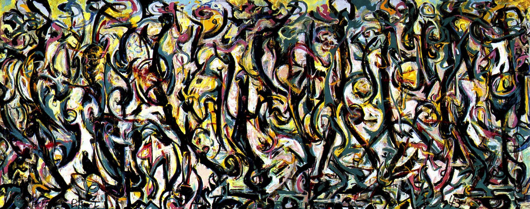
Pollock

4509 words, 23 min read

It would be a mistake to overlook a beautiful track that runs through Amoris Lætitia, which is that of Pope Francis offering hands-on advice on how to live well together as a family. In fact, these tips and tricks, I believe, also transpose very well onto any other community, whether it be civil or religious, and offer guidance on how to preserve open, loving and welcoming relationships of mutual care and closeness. What I would therefore like to do is put the theology and pastoral guidance that is in AL to one side and just share with you some of my favorites from among Francis gems of advice next.

The first set of Pope Francis' suggestions comes from a meditation on St. Paul's Hymn to Love, which goes as follows, and which focus on what individual attitudes make me most predisposed to loving others in the way Jesus did:
“Love is patient, love is kind;
love is not jealous or boastful;

it is not arrogant or rude.

Love does not insist on its own way,
it is not irritable or resentful;

it does not rejoice at wrong,

but rejoices in the right.

Love bears all things,

believes all things,

hopes all things,

endures all things” (1 Cor 13:4-7).
Here Francis first dispels and misunderstanding of patience and then goes on to talk about what it is that can undermine it:
"Being patient does not mean letting ourselves be constantly mistreated, tolerating physical aggression or allowing other people to use us. We encounter problems whenever we think that relationships or people ought to be perfect, or when we put ourselves at the centre and expect things to turn out our way. Then everything makes us impatient, everything makes us react aggressively." (§92)
The remedy he then presents consists in compassion and an acceptance of difference:
"Patience takes root when I recognize that other people also have a right to live in this world, just as they are. It does not matter if they hold me back, if they unsettle my plans, or annoy me by the way they act or think, or if they are not everything I want them to be. Love always has an aspect of deep compassion that leads to accepting the other person as part of this world, even when he or she acts differently than I would like." (§92)
To combat feelings of envy, Pope Francis reminds us of the uniqueness of each person and of one's pursuit of happiness not being enemy to that of another:
"Envy is a form of sadness provoked by another’s prosperity; it shows that we are not concerned for the happiness of others but only with our own well-being. Whereas love makes us rise above ourselves, envy closes us in on ourselves. True love values the other person’s achievements. It does not see him or her as a threat. It frees us from the sour taste of envy. It recognizes that everyone has different gifts and a unique path in life. So it strives to discover its own road to happiness, while allowing others to find theirs."(§95)
Such an attitude then leads to a broadening of scope for my attention and extends the circle of those who are candidates for being loved:
"Love inspires a sincere esteem for every human being and the recognition of his or her own right to happiness. I love this person, and I see him or her with the eyes of God, who gives us everything “for our enjoyment” (1 Tim 6:17). As a result, I feel a deep sense of happiness and peace. This same deeply rooted love also leads me to reject the injustice whereby some possess too much and others too little. It moves me to find ways of helping society’s outcasts to find a modicum of joy. That is not envy, but the desire for equality." (§96)
Commenting on St. Paul speaking out against arrogance, Francis contrasts it with a love for the weak:
"[Some people] become “puffed up” before others. [... They] think that, because they are more “spiritual” or “wise”, they are more important than they really are. [...] Some think that they are important because they are more knowledgeable than others; they want to lord it over them. Yet what really makes us important is a love that understands, shows concern, and embraces the weak." (§97)
Next, rudeness is countered with a kind look that builds bonds and prevents egoism:
"[L]ove is not rude or impolite; it is not harsh. Its actions, words and gestures are pleasing and not abrasive or rigid. Love abhors making others suffer. [...] To be open to a genuine encounter with others, “a kind look” is essential. This is incompatible with a negative attitude that readily points out other people’s shortcomings while overlooking one’s own. A kind look helps us to see beyond our own limitations, to be patient and to cooperate with others, despite our differences. Loving kindness builds bonds, cultivates relationships, creates new networks of integration and knits a firm social fabric. In this way, it grows ever stronger, for without a sense of belonging we cannot sustain a commitment to others; we end up seeking our convenience alone and life in common becomes impossible." (§99-100)
Such a move beyond oneself calls for generosity, whose prerequisite is love of oneself so that love of another may become possible:
"The Bible makes it clear that generously serving others is far more noble than loving ourselves. Loving ourselves is only important as a psychological prerequisite for being able to love others: “If a man is mean to himself, to whom will he be generous? No one is meaner than the man who is grudging to himself” (Sir 14:5-6)." (§102)
Irritability and and discord are tackled next and Pope Francis reminds us that a small gesture is often all it takes to put and end to them:
"It is one thing to sense a sudden surge of hostility and another to give into it, letting it take root in our hearts: “Be angry but do not sin; do not let the sun go down on your anger” (Eph 4:26). My advice is never to let the day end without making peace in the family. “And how am I going to make peace? By getting down on my knees? No! Just by a small gesture, a little something, and harmony within your family will be restored. Just a little caress, no words are necessary. But do not let the day end without making peace in your family”. Our first reaction when we are annoyed should be one of heartfelt blessing, asking God to bless, free and heal that person. “On the contrary bless, for to this you have been called, that you may obtain a blessing” (1 Pet 3:9)." (§104)
Seeing mountains where there are only molehills is an obstacle to forgiveness that Francis warns against in following paragraph:
"As Jesus said, “Father, forgive them; for they know not what they do” (Lk 23:34). Yet we keep looking for more and more faults, imagining greater evils, presuming all kinds of bad intentions, and so resentment grows and deepens. Thus, every mistake or lapse on the part of a spouse can harm the bond of love and the stability of the family. Something is wrong when we see every problem as equally serious; in this way, we risk being unduly harsh with the failings of others. The just desire to see our rights respected turns into a thirst for vengeance rather than a reasoned defence of our dignity." (§105)
Next, Francis comments on St. Paul speaking about the importance of joy, which needs to be triggered by the successes of others just as much as by my own:
"If we fail to learn how to rejoice in the well-being of others, and focus primarily on our own needs, we condemn ourselves to a joyless existence, for, as Jesus said, “it is more blessed to give than to receive” (Acts 20:35). The family must always be a place where, when something good happens to one of its members, they know that others will be there to celebrate it with them." (§110)
The final four attributes of love that St. Paul lists refer to how it engages with "all things." First, it abstains from judgement:
"[Love] implies limiting judgment, checking the impulse to issue a firm and ruthless condemnation: “Judge not and you will not be judged” (Lk 6:37). Although it runs contrary to the way we normally use our tongues, God’s word tells us: “Do not speak evil against one another, brothers and sisters” (Jas 4:11). Being willing to speak ill of another person is a way of asserting ourselves, venting resentment and envy without concern for the harm we may do. We often forget that slander can be quite sinful; it is a grave offense against God when it seriously harms another person’s good name and causes damage that is hard to repair." (§112)
Such an attitude also favors silence over expressing judgment and recognizes that love and imperfection can coexist:
"[Married couples] keep silent rather than speak ill of them. This is not merely a way of acting in front of others; it springs from an interior attitude. Far from ingenuously claiming not to see the problems and weaknesses of others, it sees those weaknesses and faults in a wider context. It recognizes that these failings are a part of a bigger picture. We have to realize that all of us are a complex mixture of light and shadows. The other person is much more than the sum of the little things that annoy me. Love does not have to be perfect for us to value it. The other person loves me as best they can, with all their limits, but the fact that love is imperfect does not mean that it is untrue or unreal. It is real, albeit limited and earthly. If I expect too much, the other person will let me know, for he or she can neither play God nor serve all my needs. Love coexists with imperfection. It “bears all things” and can hold its peace before the limitations of the loved one." (§113)
Second, trust is the attitude with which all is approached, leading to freedom, sincerity and transparency:
"[T]rust enables a relationship to be free. It means we do not have to control the other person, to follow their every step lest they escape our grip. Love trusts, it sets free, it does not try to control, possess and dominate everything. This freedom, which fosters independence, an openness to the world around us and to new experiences, can only enrich and expand relationships. The spouses then share with one another the joy of all they have received and learned outside the family circle. At the same time, this freedom makes for sincerity and transparency, for those who know that they are trusted and appreciated can be open and hide nothing. Those who know that their spouse is always suspicious, judgmental and lacking unconditional love, will tend to keep secrets, conceal their failings and weaknesses, and pretend to be someone other than who they are." (§115)
Third, hope allows for being more persistent in recognizing the good in all circumstances and people:
"[St. Paul] speaks of the hope of one who knows that others can change, mature and radiate unexpected beauty and untold potential. This does not mean that everything will change in this life. It does involve realizing that, though things may not always turn out as we wish, God may well make crooked lines straight and draw some good from the evil we endure in this world. [...] This realization helps us, amid the aggravations of this present life, to see each person from a supernatural perspective, in the light of hope, and await the fullness that he or she will receive in the heavenly kingdom, even if it is not yet visible." (§116-117)
Finally, love is all-enduring, whose meaning Pope Francis explains by the following, extensive quote from a sermon given by Martin Luther King:
"The person who hates you most has some good in him; even the nation that hates you most has some good in it; even the race that hates you most has some good in it. And when you come to the point that you look in the face of every man and see deep down within him what religion calls ‘the image of God’, you begin to love him in spite of [everything]. No matter what he does, you see God’s image there. There is an element of goodness that he can never sluff off... Another way that you love your enemy is this: when the opportunity presents itself for you to defeat your enemy, that is the time which you must not do it... When you rise to the level of love, of its great beauty and power, you seek only to defeat evil systems. Individuals who happen to be caught up in that system, you love, but you seek to defeat the system... Hate for hate only intensifies the existence of hate and evil in the universe. If I hit you and you hit me and I hit you back and you hit me back and so on, you see, that goes on ad infinitum. It just never ends. Somewhere somebody must have a little sense, and that’s the strong person. The strong person is the person who can cut off the chain of hate, the chain of evil." (§118)
In the next part of AL, Francis builds on the above analysis of what it means to love that followed St. Paul's hymn and applies it to interpersonal relationships in a family. Here he starts with underlining the importance of looking at each other:
"A look of appreciation has enormous importance, and to begrudge it is usually hurtful. How many things do spouses and children sometimes do in order to be noticed! Much hurt and many problems result when we stop looking at one another. [...] Love opens our eyes and enables us to see, beyond all else, the great worth of a human being." (§128)
Beyond looking at each other kindly, expressing mutual love to one another also through words further nourishes and strengthens it:
"The love of friendship unifies all aspects of marital life and helps family members to grow constantly. This love must be freely and generously expressed in words and acts. In the family,“three words need to be used. I want to repeat this! Three words: ‘Please’, ‘Thank you’, ‘Sorry’. Three essential words!”. “In our families when we are not overbearing and ask: ‘May I?’; in our families when we are not selfish and can say: ‘Thank you!’; and in our families when someone realizes that he or she did something wrong and is able to say ‘Sorry!’, our family experiences peace and joy”. Let us not be stingy about using these words, but keep repeating them, day after day. [...] The right words, spoken at the right time, daily protect and nurture love." (§133)
Francis next warns against an idealizing of earthly love, which denies its need for growth:
"It is not helpful to dream of an idyllic and perfect love needing no stimulus to grow. A celestial notion of earthly love forgets that the best is yet to come, that fine wine matures with age. [...] It is much healthier to be realistic about our limits, defects and imperfections, and to respond to the call to grow together, to bring love to maturity and to strengthen the union, come what may." (§135)
In the following paragraphs, Francis presents a masterclass in dialogue, which "can only be the fruit of a long and demanding apprenticeship." Here the starting point are differences:
"Men and women, young people and adults, communicate differently. They speak different languages and they act in different ways. Our way of asking and responding to questions, the tone we use, our timing and any number of other factors condition how well we communicate. We need to develop certain attitudes that express love and encourage authentic dialogue." (§136)
The first of these prerequisite attitudes is taking time:
"This means being ready to listen patiently and attentively to everything the other person wants to say. It requires the self-discipline of not speaking until the time is right. Instead of offering an opinion or advice, we need to be sure that we have heard everything the other person has to say. This means cultivating an interior silence that makes it possible to listen to the other person without mental or emotional distractions. Do not be rushed, put aside all of your own needs and worries, and make space. Often the other spouse does not need a solution to his or her problems, but simply to be heard, to feel that someone has acknowledge their pain, their disappointment, their fear, their anger, their hopes and their dreams." (§137)
The second attitude is giving importance to the other:
"This means appreciating them and recognizing their right to exist, to think as they do and to be happy. Never downplay what they say or think, even if you need to express your own point of view. Everyone has something to contribute, because they have their life experiences, they look at things from a different standpoint and they have their own concerns, abilities and insights. We ought to be able to acknowledge the other person’s truth, the value of his or her deepest concerns, and what it is that they are trying to communicate, however aggressively. We have to put ourselves in their shoes and try to peer into their hearts, to perceive their deepest concerns and to take them as a point of departure for further dialogue." (§138)
Third, dialogue requires an open mind, a willingness to change and an appreciation of diversity:
"Don’t get bogged down in your own limited ideas and opinions, but be prepared to change or expand them. The combination of two different ways of thinking can lead to a synthesis that enriches both. The unity that we seek is not uniformity, but a “unity in diversity”, or “reconciled diversity”. Fraternal communion is enriched by respect and appreciation for differences within an overall perspective that advances the common good. We need to free ourselves from feeling that we all have to be alike." (§139)
Francis then moves from talking about the "what" to the "how," which also calls for "astuteness":
"[I]f hard feelings start to emerge, they should be dealt with sensitively, lest they interrupt the dynamic of dialogue. The ability to say what one is thinking without offending the other person is important. Words should be carefully chosen so as not to offend, especially when discussing difficult issues. Making a point should never involve venting anger and inflicting hurt. A patronizing tone only serves to hurt, ridicule, accuse and offend others. Many disagreements between couples are not about important things. Mostly they are about trivial matters. What alters the mood, however, is the way things are said or the attitude with which they are said." (§139)
The fourth attitude of dialogue then is to show care for the other:
"Love surmounts even the worst barriers. When we love someone, or when we feel loved by them, we can better understand what they are trying to communicate. Fearing the other person as a kind of “rival” is a sign of weakness and needs to be overcome. It is very important to base one’s position on solid choices, beliefs or values, and not on the need to win an argument or to be proved right." (§140)
Finally, the fifth prerequisite for dialogue is that I need to have something to say, to share:
"This can only be the fruit of an interior richness nourished by reading, personal reflection, prayer and openness to the world around us. Otherwise, conversations become boring and trivial. When neither of the spouses works at this, and has little real contact with other people, family life becomes stifling and dialogue impoverished." (§141)
Following the above recipes for successful dialogue, Pope Francis reflects on emotions and the need to direct them towards the good of others:
"Experiencing an emotion is not, in itself, morally good or evil.140 The stirring of desire or repugnance is neither sinful nor blameworthy. What is morally good or evil is what we do on the basis of, or under the influence of, a given passion. But when passions are aroused or sought, and as a result we perform evil acts, the evil lies in the decision to fuel them and in the evil acts that result. Along the same lines, my being attracted to someone is not automatically good. If my attraction to that person makes me try to dominate him or her, then my feeling only serves my selfishness. To believe that we are good simply because “we feel good” is a tremendous illusion. There are those who feel themselves capable of great love only because they have a great need for affection, yet they prove incapable of the effort needed to bring happiness to others. They remain caught up in their own needs and desires. In such cases, emotions distract from the highest values and conceal a self-centredness that makes it impossible to develop a healthy and happy family life." (§145)
Lest the above be misunderstood as opposition to enjoyment and pleasure, Francis goes on to putting them into context:
"This does not mean renouncing moments of intense enjoyment,145 but rather integrating them with other moments of generous commitment, patient hope, inevitable weariness and struggle to achieve an ideal. [...] Some currents of spirituality teach that desire has to be eliminated as a path to liberation from pain. Yet we believe that God loves the enjoyment felt by human beings: he created us and “richly furnishes us with everything to enjoy” (1 Tim 6:17). Let us be glad when with great love he tells us: “My son, treat yourself well... Do not deprive yourself of a happy day” (Sir 14:11-14). Married couples likewise respond to God’s will when they take up the biblical injunction: “Be joyful in the day of prosperity” (Ec 7:14). What is important is to have the freedom to realize that pleasure can find different expressions at different times of life, in accordance with the needs of mutual love. In this sense, we can appreciate the teachings of some Eastern masters who urge us to expand our consciousness, lest we be imprisoned by one limited experience that can blinker us. This expansion of consciousness is not the denial or destruction of desire so much as its broadening and perfection." (§148-149)
Much later on in Amoris Lætitia, Pope Francis offers advice to married couples by encouraging to make time for each other a suggestion that also applies to other communities and where it may only be the forms that change but not the substance of the following:
"Love needs time and space; everything else is secondary. Time is needed to talk things over, to embrace leisurely, to share plans, to listen to one other and gaze in each other’s eyes, to appreciate one another and to build a stronger relationship. Sometimes the frenetic pace of our society and the pressures of the workplace create problems. At other times, the problem is the lack of quality time together, sharing the same room without one even noticing the other. [...] Once a couple no longer knows how to spend time together, one or both of them will end up taking refuge in gadgets, finding other commitments, seeking the embrace of another, or simply looking for ways to flee what has become an uncomfortable closeness." (§ 224-225)
Francis then points to the importance both of routine and its interruption by celebrations and parties:
"Young married couples should be encouraged to develop a routine that gives a healthy sense of closeness and stability through shared daily rituals. These could include a morning kiss, an evening blessing, waiting at the door to welcome each other home, taking trips together and sharing household chores. Yet it also helps to break the routine with a party, and to enjoy family celebrations of anniversaries and special events. We need these moments of cherishing God’s gifts and renewing our zest for life. As long as we can celebrate, we are able to rekindle our love, to free it from monotony and to colour our daily routine with hope." (§226)
The role of crises and their being integral to the life of a family is on Francis' mind next:
"The life of every family is marked by all kinds of crises, yet these are also part of its dramatic beauty. Couples should be helped to realize that surmounting a crisis need not weaken their relationship; instead, it can improve, settle and mature the wine of their union. Life together should not diminish but increase their contentment; every new step along the way can help couples find new ways to happiness. Each crisis becomes an apprenticeship in growing closer together or learning a little more about what it means to be married. There is no need for couples to resign themselves to an inevitable downward spiral or a tolerable mediocrity. On the contrary, when marriage is seen as a challenge that involves overcoming obstacles, each crisis becomes an opportunity to let the wine of their relationship age and improve." (§232)
Finally, at the end of Amoris Lætitia, Pope Francis draws this thread to its conclusion by pointing to the consequences of a life lived along the above lines: freedom and a choice of God as the greatest good:
"There comes a point where a couple’s love attains the height of its freedom and becomes the basis of a healthy autonomy. This happens when each spouse realizes that the other is not his or her own, but has a much more important master, the one Lord. No one but God can presume to take over the deepest and most personal core of the loved one; he alone can be the ultimate centre of their life. At the same time, the principle of spiritual realism requires that one spouse not presume that the other can completely satisfy his or her needs. The spiritual journey of each – as Dietrich Bonhoeffer nicely put it – needs to help them to a certain “disillusionment” with regard to the other, to stop expecting from that person something which is proper to the love of God alone. This demands an interior divestment. The space which each of the spouses makes exclusively for their personal relationship with God not only helps heal the hurts of life in common, but also enables the spouses to find in the love of God the deepest source of meaning in their own lives. Each day we have to invoke the help of the Holy Spirit to make this interior freedom possible. (§320)