Showing posts with label Gianfranco Ravasi. Show all posts

Wednesday, 24 August 2016

Ravasi: God’s presence in innocent suffering

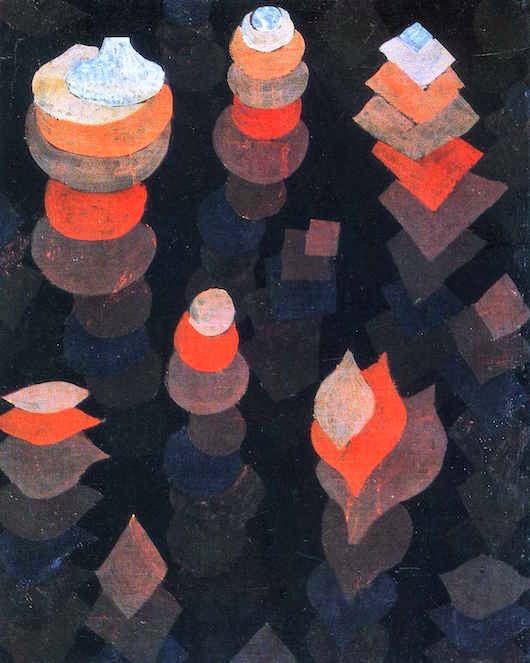
Autumn rhythm

4092 words, 21 min read

The following is my rough, English translation of Cardinal Gianfranco Ravasi’s opening talk, given during the meeting of the Courtyard of the Gentiles in Lecco on 14th June 2016, entitled “Innocent suffering”.


My reflection will be made up of, if you will a kind of diptych, two panels. One dark, sombre panel, and one that is a little bit more luminous, while not being able to remove the darkness altogether. But, before turning to these two, I would like to make a premise, if you will, the binding that holds together the two panels. And, I would like to label this premise with the title of a book by an American writer called Susan Sontag. This American writer, who was a Hebrew non-believer, of non-believing origin, was diagnosed with cancer around 1975. And in 1978 she published a book, significantly entitled “Illness as Metaphor” in which she represented and interpreted in her own flesh, but also in her experience as an intellectual, precisely this event that she has experienced, the event of being ill with a tumor. And the title is significant. [...]

So, illness as a metaphor, that is illness as a symbol, because of which it is not only a physiological, biological, psychophysical question. It is something more. The patient lives through an experience that is existential, sapiential, and also philosophical; it is fundamentally anthropological. Because of which, when facing illness, and more specifically a sick person (illness being an abstract term), what is not sufficient - it is necessary but not sufficient - is medical science. There is a need also for the humanities. Anatomy is not enough, there is a need also for spirituality, understood in the most general possible, non-denominational sense. Therapy is not enough, there is a need also for a more global vision of the person, a metaphor, because it is the representation of the human being that is limited, frail, fragile, imperfect. It is the experience of an entire being. So, this is what I would say is the binding that allows also for a Courtyard of the Gentiles like this one to happen, that has a welfare dimension and a scientific one, but that is - above all - a human experience.

Well, now we arrive at the two panels that I would like to call forth. The first panel, I have said, is the dark one. That is, illness in general. Suffering in general. But above all this: innocent suffering, which brings about a crisis of sense, a crisis of meaning.

It is curious to note, and maybe this is not sufficiently developed, not even among theologians, that theology as such is born as theodicy, which, literally, means to justify God. Why? Because of the question of suffering, of evil, of the world. This was the function of theology, because such an absence of sense is something we see represented very well - and here I will have to appeal more than once to the experience of those witnesses, who are believers or non-believers, who are - I would say - the most profound witnesses, who delve ... poets, writers, who live this experience. I started precisely with Sontag.

You all, I believe, have read that novel, which for this topic is fundamental: “La peste” [The Plague] by Camus.[...] You remember Camus’ La peste, but I would just like to remind you of that moment in which Dr. Rieux holds in his arms the child who has caught the plague, and he says: “I could never believe in a creation and in a creator God for as long as I hold in my arms a child sick with the plague.”1 We could say sick with cancer. The parents who embrace their child, sick with an illness that by then is making their life drip away towards its end, cannot but express this crisis of meaning. As I said, it is precisely like this that theology came about.

I would now like to share the curious witness of a philosopher, whom you all know at least by reputation, Epicurus. As far as Epicurus is concerned, his writings are not preserved, except as quotes or as fragments. Here we have a 4th century Christian writer, Lactantius, who was the tutor of Constantine’s son, quoting this syllogistic sequence, which fundamentally is an irresolvable contradiction, put by Epicurus as follows - and I’ll summarize it here, as it is a bit more articulate in Latin: “If God wants to remove evil, but can’t, he is impotent and therefore isn’t God. If God can remove evil but does not want to, he is “hostilis et invidus” - hostile and envious with regard to us. Third, if he wants to remove evil and can do it - as befits a God - then why is there evil?”2

You can see how the interweaving of these questions is consequential and it is this experience of the absence of sense, of darkness, that can be found, paradoxically for the believer, in the Bible itself. We have a book, like the book of Job, among others, one of the literary masterpieces of humanity, that poses this problem of innocent suffering. Job is caught up in this storm, and his theologian friends, to justify God, affirm the principle that is characteristic of many cultures, not only of the culture of the Bible, of the Old Testament, which is the principle of retribution. You have sinned, therefore you suffer. Crime - punishment. Which is a very simple explanation. But, obviously it clashes with a rising up of reality, with a rising up of this person who is aware of not being guilty. And this brings us to his challenge, and I am quoting from among the many possible pages of this protest against God. “I,” says Job, “would speak3 with the Almighty; I want to argue with God.” (Job 13:3).

You can see how it is courageous that a sacred text, which for believers has the seal of God, presents itself with this attack against God. It is also true that at a certain point, Job, slowly as his dialogue progresses, strays into cursing. And this blasphemy, in that moment, is a paradoxical profession of faith. Because he, once more, returns to that fundamental node, which is a theological node, in fact he accuses God: “But you are like a sadistic archer who pierces me in my heart and my kidneys. You are like a leopard who fixes his eyes on me to devour me. You are like a triumphant general who crushes my skull.” (cf. Job 16:12-14, Job 10:16).

As you can see it is a representation of the divine God as an enemy, as a monster, because of which, in his commentary on Job, and we say this in an ecumenical spirit, Luther uses a phrase that is truly dazzling from this point of view. [...] It is a phrase that is based precisely on Job: “God is pleased much more with the blasphemous cries of a desperate person than with the composed praises of a conformist on Sunday morning during a service.” This phrase is significant, because God listens more to Job than to his theologian friends, those perfect, impassive, impeccable theologians, as will be said at the end. Because, you know, at the end God says: “Job is the only one who spoke rightly about me.” (cf. Job 42:7)

That is why, at this point I think that innocent suffering is the highest, or most profound, point of the silence of God, of the incomprehensibility of the divine mystery. This is the first panel of the diptych.

The second panel, which, as I have said, is more luminous, but without being totally solar [...]. And this panel is that even in such pain, in pain in general, there is a revelation of sense, of meaning. [...] I don’t now want to present the history of humanity that has continuously been clashing against this citadel, this well-defended citadel that is the citadel of suffering, not even thinking of its heart, which is the citadel of innocent suffering. It has tried many explanations, ranging from the totally pessimistic ones, where what in the end becomes difficult to explain is the good and not evil, this being our condition. Here we can think of certain ideas at the margins of Buddhism, for example, where, practically, evil is the fundamental substance by which we are permeated.

On the other hand, there are entirely optimistic perspectives. Here let’s take a look at a very approximate, simplistic example, [...] the Hindu idea where we are part of the great ocean of God, an ocean that on the surface may have storms, but in its abyssal depths there is serenity, there is calm, there is peace. And therefore it suffices to enter into this kind of mysticism of depth.

Then there are these explanations, already in the Greek world, where Aeschylus says: “Wisdom is conquered only through suffering.” But he himself, Aeschylus, in The Persians, puts these words into the mouth of one of his characters: “Is there a God who answers from the shadow to the breath of pain that rises from the earth towards heaven?”4 And the question was left unanswered, that is, [the answer was] negative. And then he also maintained that pain has a paideic, cathartic function, but this is very problematic in the case of innocent suffering. I don’t want to enter here into the history of the hermeneutic, the interpretation of pain ...

The book of Job itself, to tell the truth, isn’t an attempt at an explanation of pain. It isn’t. If you pay attention to its conclusion - and I can’t now show what it actually is about - and if you see the last words that Job pronounces, leaving aside the final part which is a framing narrative quoted by the author and which was already known in previous literature ... No, let’s pause above all at the point of the true final poetry. Job is in front of God and God simply tells him: “All you see is just a small horizon of the mystery of being, of existence that is immense, and like one who, when looking at a painting, only sees a detail made of small brush strokes, of colors that don’t make sense, then it is obvious that it doesn’t have meaning.” Only God, and we too, when looking at the painting in its entirety, can succeed in understanding its meaning. Also this is an attempt at an explanation, that, however, has some very specific preconditions for acceptance. But, I wanted to say that Job, at the end, makes a statement that is substantially of another kind, of faith: “By hearsay I had heard of you, but now my eye has seen you. Therefore I disown what I have said, and repent in dust and ashes.” (Job 42:5-6)

So all is again as before, expect that he had now met God. And this is why it is possible to make a reflection, that I only sketch out here as it is very complex, about the Christology of suffering. That is, about a Christian explanation of suffering, which, naturally, has as its starting point a fundamental given for Christianity. The real, effective, concrete intertwining of the transcendent and the immanent, of the divine and the human. That great masterpiece that is the prologue of the fourth Gospel, the Gospel of St. John, as you know, has those fascinating verses [...] from 1:1 to 1:14. The Logos, which is perfect, which is the beginning, which is God, which is the cause of all being ... and the Logos became flesh. Precisely using the verb “to become.” Therefore here we have the specific concept of the entrance of the divine into the human, which is very well represented by the account of the Passion, where you can see that Christ traverses the full, dark spectrum of pain. The full range is there on purpose, from the fear of death (Father, take this cup from me, which in Biblical language means this - I am afraid of dying), then passing through the sweating of blood, then solitude, which is one of the great sufferings, the great pains; the betrayal by his friends, and then also physical torture, and then ascending that hill, ascending the cross, he, as God!, passes through the silence of God (My God, my God, why have you forsaken me), and then - at the end - death. Death, which is our ID card. Together with pain, but above all death, because God - by definition - is eternal, does not die. There, instead, and it is curious that the Gospels of Matthew and of Mark present the death of Christ, unlike those of Luke and John, who see divinity already shining through the corpse, the crucified corpse, they represent the death of Christ as an ugly death. He “cried out again in a loud voice, and gave up his spirit” (Matthew 27:50). The cry of a hand that raises up again and tries to grab the air one last time, while he is suffocating to death.

Here we arrive at the fundamental component of the Christian explanation. [Outside Christianity] God doesn’t die, does not suffer, (The suffering of God is something theologians have elaborated, but it has another meaning.) because these are human characteristics. Christianity says that God isn’t he who bends down like an impassive emperor and holds out his hand towards the suffering person, at times even healing them. Instead it is he who traverses the non-sense of dying. He as God, enters our horizon.

St. Paul has an expression in 2 Corinthians, chapter 5, which is very suggestive in this sense, even though it does not refer to suffering: “For our sake he made him to be sin who did not know sin, so that we might become the righteousness of God in him.” (2 Corinthians 5:21). You see that he takes on himself another of the fundamental human characteristics: guilt, therefore not only pain but also guilt, and in that moment, naturally, he, when he is reduced to a corpse, when he has finally assumed all our identity, also in that moment he, however, does not cease to be God. And it is because of this that he plants in suffering, in evil, in guilt a seed of the eternal, of the infinite, a seed of redemption. And this is the meaning of the resurrection. It is simply to remember that the passage of God through human reality isn’t a passage that leaves it unaltered. And it is because of this that there is a tension towards redemption which is that of a divine that has traversed, while preserving its identity, our own identity, which is transient and weak.

You have surely heard about Dietrich Bonhoeffer. Bonhoeffer was one of the famous theologians of the last century and was eliminated by Hitler. Note well the date of his death: 9th April 1945, when the Nazi monster was already in agony and it seems that the order came directly from the top to have him hanged at the camp in Flossenbürg where he was detained. During his imprisonment, he wrote [...] many notes among which there is this one, which is significant and which may seem - at first sight - a bit paradoxical. He said: “God in Christ does not save us by virtue of his omnipotence - otherwise he would remain above, in his prefect transcendence, in his golden horizon - God saves us in Christ by virtue of his impotence, because he enters and takes on also our quality.”

At this point it can be understood also that at the center of the heart of Christianity there is a problem. Certainly, as you see it is an option, an option of faith, to recognize the center of the incarnation, the word that makes itself flesh, flesh that is fragile, transient, weak. And, let’s think of those words, and I’ll only quote a few lines to you from “Il dolore” (“Grief”) by Ungaretti, which he wrote because of the death of his son Antonietto:5

Christ, brother, you who immolate yourself
perennially to rebuild
man humanly
Holy, Holy, Holy6 you who suffer
And it is in this way that brotherhood with us comes about. [...] I would say that all believers and non-believers can take on the subtle, implied component that justifies this Christology of suffering. God does not want to - we can’t say that he can’t, but he doesn’t want to, he does not manage to as the rabbinic tradition says, impede that which is also structurally required. The creature as such must be limited, finite, transient ... [...] Beyond this, in the interior of this incarnation, there is a fundamental dimension which is one that can be put into practice also by us. At the basis there is, as Ungaretti said: “Christ, brother, you who immolate yourself to rebuild man.” There is solidarity. There is love.

And here I would like to remember, above all, a miracle. Usually we look at miracles as if they were magical gestures. Let’s never forget that Christ, instead, requires for them to be done in silence, hiding their spectacular aspect. The miracle I have in mind is that of the leper. Hansen’s disease is an illness like many others, but in the oriental world it is seen as the compendium of all suffering, because it wasn’t only a physical suffering, the flesh that would disintegrate, but it was also a social and moral condemnation. It was an excommunication. The leper had to have committed such a terrible transgression that this is the punishment they received. It was thought to be the most infectious disease - even though that is not true - because of which they had to live separately from the community. The book of Leviticus says that the leper has to signal their presence to others, because it is a polluting presence, and has to shout so that the other would not cross their path. What does Christ do? And this is underlined by the Evangelists. Not only does he go to meet the leper, he goes to speak to him - asking him what he wants - and then Christ touches him and tells him: “I will do it. Be made clean.” (Matthew 8:3). He touches him. You see, it is the gesture of assumption. The gesture of fraternity. The gesture of love. [...]

I’d like to conclude by giving the word to two people, whom I’d ideally summon here, two figures of history, of culture of the last century. Different from each other, one a believer the other a non-believer.

Let’s start with the believer, the poet Paul Claudel [...]. He writes: “God didn’t come to explain suffering, but to fill it with his presence. God, therefore, doesn’t protect us from suffering, but sustains us in every suffering.” Because he too entered there. Also he, with his human impotence, but precisely because he does not cease to be God, sustains us. And the other, and this is why I say that this act of solidarity, can be performed by all and can be a principle of - in quotes - “healing”, not necessarily of physical healing.

When doctors enter a corridor, a hospital, the room of a patient - and it was Susan Sontag who noted this, when she said: “They arrived and all stood there in front of me and I was lying in bed.” You see the profound difference between the two positions, because, standing up is the position of the living, lying down the position of the dead, of the absolutely impotent. It is also true that standing up has been the hallmark not only of the living, but of the greatness of the human person. From evolution we know that it is much more logical to walk on all fours like animals do, also for the distribution of weight. Humans, as a result of evolution, use their posture, that is rather improbable from the point of view of statics - to carry all of their weight on such a small base. But they have done it so that, from this position, they could dominate the horizon of all other living beings and of all being.

So, in that moment comes this profound difference, because of which - evidently - the gesture of love, of solidarity that isn’t just a matter of bowing down but of bringing one’s own understanding and one’s alliance, one’s harmony, one’s closeness, even if the sick person is burdensome and pedantic, because their horizon is deprived of meaning and they are in their world, looking for sense. We must accompany them without sneaking glances at our watches.

So, this act of solidarity is possible for all and it is represented well by the last person whom I’d like to summon here, ideally, and whom I quote often. He is an agnostic, lay, anticlerical writer - Ennio Flaiano, also the screenwriter of some of Fellini’s movies.

During his life it was specifically this topic [innocent suffering] that was before his eyes, because one of his daughters was born with an epileptic encephalopathy. This daughter survived him. He would never speak about her. He also saw her as a metaphor, a symbol of guilt. [...] But, he never spoke about her. After his death, among his papers, they found a text, a rough draft and it wasn’t clear whether it was for a novel or a screenplay.

This text is truly significant, because it is written by a non-believer. He imagines that Christ returns to earth. And, as soon as he returns and the news spreads, he is surrounded by a crowd of the sick who huddle around him and ask for miracles. They ask for healing. And he is uneasy, because now there is something that wasn’t there before - there is television, cinema, the press, advertising, which he doesn’t want. He’d like signs of a different kind and even though he cures them, he does so unhappily. One day he finally manages to free himself from the crowd and retreat along a path. And as he walks along this path to find solitude and pray to the Father, he sees the outline of a strange couple on the horizon. A father who drags his shaky daughter by he hand, as she walks beside him. When Christ sees them, he is ready to perform. He says to himself that he’ll do it one more time, but at least this one is in solitude. However, when this father and his daughter are in front of Christ, and Christ is about to perform his miraculous gesture, that father says: “No, I don’t want you to heal her. I would like you to love her.” And so, Christ takes this little girl, kisses her, and say this phrase, which is the concluding phrase: “In truth, in truth I tell you, this man has asked of me that which I truly want to and can give.”


1 Cardinal Ravasi may be paraphrasing this sentence from The Plague: “I have a different notion of love; and to the day I die I shall refuse to love this creation in which children are tortured.”
2 The full text of that quote is: ““God,” he [Epicurus] says, “either wants to eliminate bad things and cannot, or can but does not want to, or neither wishes to nor can, or both wants to and can. If he wants to and cannot, then he is weak and this does not apply to god. If he can but does not want to, then he is spiteful which is equally foreign to god’s nature. If he neither wants to nor can, he is both weak and spiteful, and so not a god. If he wants to and can, which is the only thing fitting for a god, where then do bad things come from? Or why does he not eliminate them?” Lactantius, On the Anger of God, 13.19”
3 In the Italian translation quoted by Ravasi, the verb is “accuse” or “incriminate” rather than “speak”.
4 Maybe a reference to the following lines:
“Hears the honour’d godlike king?
These barbaric notes of wo,
Taught in descant sad to ring,
Hears he in the shades below?”
5 Since I couldn’t find an English translation of “Mio fiume anche tu” from which Ravasi quotes, this is my attempt at a verbatim translation - a crime when applied to poetry but it will have to do in the absence of anything else.
6 Ravasi here adds an extra “Holy” that is not in Ungaretti’s text.

Tuesday, 24 May 2016

Finding beauty in ugliness

Klee fantasy

1515 words, 8 min read

Last Saturday, Cardinal Gianfranco Ravasi addressed a meeting entitled “Beauty will save the world, let us save beauty,” organized by Earth Day Italia, that took place in the Vatican’s church of St Stephen of the Abyssinians. In his talk, Cardinal Ravasi spoke about the etymology of the word for beauty in Hebrew, Greek and Italian, pointing to the fact that in all these languages the word either directly refers both to beauty and goodness, or at least has roots that do. After the Q&A that followed, Cardinal Ravasi then added a few words in defense of a certain kind of ugliness, lest beauty be misunderstood as aestheticizing. What follows is my translated transcript of the talk:


I would like to start from a thing that is the most material possible, the most limiting possible, which, however, is always fundamental for humanity: that is, the vocabulary, words. […] In the Bible, both the Old and New Testaments, using two completely different languages - Hebrew and Greek, and we are still at the point of vocabulary, words, which, on the other hand are the fundamental instruments of communication, we have a single word that contemporaneously expresses two realities that are different for us. In fact, in Hebrew there is the word ‘tov’ (טוֹב) that at the same time means good and beautiful. And in the New Testament, predominantly when a prominent figure or a significant act is to be described, the Greek word kalos (καλός) is used, which in the New Testament means good.

Vatican good shepherd800px ACMA Moschophoros

Let me give you an example that you all have in mind but about which you maybe do not have the idea of its original Greek basis. How does Jesus define himself in John’s Gospel? I am the good shepherd. I am sure you all have the famous statue of the good shepherd from the Vatican museums in mind, which is a Christian transcription of a Greek statue of the moscophoros. So, in Greek we have - listen! - “egō eimi ho poimēn ho kalos” (ἐγώ εἰμι ὁ ποιμὴν ὁ καλός.) “Ho kalos” - I am the beautiful shepherd, because these two realities must interweave among us.

With this background, let’s look at Italian. […] In Italian we have this word “bello”. Now, probably only few among you know […] that it has nothing to do with Latin. What does “bellum” mean in Latin? War. That has nothing to do with it. Think about the fact that the word “bello” is a deformation - or the synthesis, the portmanteau, if you will - of a late mediaeval Latin word which sounded like this: “bonicellus” which means good, pleasant, nice and which gradually became first bonellus and then bellum, but in Italian and not in Latin. So, you can see, that at the basis of the Italian word beautiful (“bello”) there is the word “good.”

Let’s now pass to another word, which is antipodean to the word beauty, which is “brutto” (ugly). In Italian there are two words that bud from it and these two other words have the same basis but are not synonymous with it, even if we may use them in an undifferentiated manner. We have the words “bruttezza” (ugliness) and the word “bruttura” (nastiness). The word “bruttezza” indicates an aesthetic quality while the word “bruttura” an ethical one. Imagine for a moment, without wishing to give offense since this applies to many other cities too, that we are going to a district at the peripheries of Rome. A dilapidated district, a district where there is exploitation and rampant overdevelopment, where blocks of flats are built on top of each other in all their ugliness (bruttezza). Such spaces also tend to become the sites of moral degeneration and of social degeneration. And so we arrive at the dimension of nastiness (bruttura).

This is why I am saying that the aesthetic question is also relevant to the ethical and social question. Imagine a kid, one of our kids, who comes out of one of these quarters, where he always sees a gray and rundown block of flats, a flowerbed - if there is one - that is always scruffy, streets that are littered with garbage … and he comes to the center and sees the splendor of architecture, of monuments, … What does he do? He slashes them. They mean nothing to him. Because, with the ethical dimension he has also lost the aesthetic one.

Piazza miracoli

Instead, let’s imagine a kid in the 14th century, who’d leave his house in Siena, would enter the Square of Miracles and walk around in that quarter. Evidently here aesthetics in some way influenced a lifestyle. Naturally, subject to the limits of the weakness and the wickedness also of the human creature.

I conclude and would just like to remember [… a message from the bishops at the Second Vatican Council to artists that reflected on the despair caused by ugliness and nastiness] but in that same message there was also another consideration […] whose basis was that art and faith - both authentic: authentic art and authentic faith - are sisters. Why? And I’d like to answer that with the words of a great painter, Paul Klee, who wrote a very important definition of art: “Art does not represent the visible, but the invisible that is in the visible.” Transcendence. And what is it that religion does if not the same job? […] And finally I would like to quote a writer who is far from Christianity and who is also immoral in the eyes of Christianity: Henry Miller, who wrote Tropic of Cancer, Tropic of Capricorn. In a short essay, The Wisdom of the Heart, […] he wrote the following phrase: “Art, like faith, is good for nothing, other than to show the meaning of life.” And that is not little.

[… at the end of the Q&A that followed, Cardinal Ravasi added:]

I would like to conclude by speaking about ugliness. Let’s say straightaway that squalor is squalor and there is ugliness that is ugly. And we need the courage to say it. We have to say that we are being assaulted by ugliness and nastiness. But, having said this, I would now like to present an defense of ugliness, but of a particular ugliness. For many, and that is why I don’t like this expression that “beauty will save the world” so much, it has become a generally aestheticizing phrase.

We can see, and these are often the victims, with women that feminine beauty has become thought of exclusively as the fruit of an artificial operation applied to a person. To the point of having created an entire medical discipline whose criteria are aestheticizing ones, at times in the form of an external lucidity that, however, isn’t a profound transparency. I remember a beautiful poem by John Donne, this great 17th century English poet, which should be read in English. What does he do? He dedicates beautiful verses to the face of his wife, which by then is marked by a web of wrinkles. To this he says - and I agree fully, “I haven’t seen a season as beautiful as autumn.”1 Imagine what Roman autumn is like. It is infinitely more beautiful than summer.

This is why I said that I would like to present a sort of defense of ugliness. […] Beauty is not smoothness. It is not a dictation formed by beautiful words searched for in a dictionary, as Sunday poets often do. It is, instead, the capacity to capture the transcendent, to capture that which is not seen, but that which is the soul of reality. So, when you go and see an exhibition […] of Caravaggio, you can’t come out from it indignant because Caravaggio also touches evil.

Caravaggio Judith Beheading Holofernes

Without reflecting on evil, and evil is ugly, we wouldn’t have 60-70% of literature. It would not exist. We’d have to get rid of virtually all of Dostoyevsky. This is why I say that it is important to remember that the beautiful is also the groundwork, the pilgrimage, the entrance to the substratum, the underground (to use Dostoyevsky), the entering into a nest of vipers (to quote Mauriac) that represent humanity. When Rilke, who is one of the great poets that I love alongside Eliot, writes the Duino Elegies, how does he define beauty? He defines it as “the beginning of terror.” This is an impressive theophany that torments. Not being a writer or a poet I’ll give my voice to Virginia Woolf, when she too defines beauty saying: “Beauty has two faces, one of joy, one of anguish, both cutting, wounding the heart.” That is, beauty offends, disturbs, disconcerts, also. Let’s think of the Divine Comedy. The best part, they say paradoxically, is the Inferno. And this is precisely because the song wants to enter … and it is also right that we be able to see in something ugly, that may represent humanity’s breath of pain, that we try to look even there for what is truly beautiful that, in the end, however, redeems even evil. It is transfiguration. It is liberation.


1 I guess Cardinal Ravasi is referring to Elegy IX: The Autumnal.

Saturday, 28 November 2015

Ravasi: Borges’ agnostic Christology

CHRIST EN CROIX  CHAGALL

1691 words, 8 min read

I have just come across a great talk by Cardinal Gianfranco Ravasi on Jorge Luis Borges, given in Cordoba, Argentina last October in the context of the Courtyard of the Gentiles and his receiving an honorary doctorate from the Universidad Católica de Córdoba there. Ravasi gives some beautiful examples from Borges' poetry that illustrate his approach to Scripture and Christ and where Ravasi underlines the richness of his understanding and the depth of his sincerity, which come from what Pope Francis speaks about as “periphery”. Note that the following is my translated transcript of the talk and that a more extensive version of it can be found here in Spanish.

To Borges, boundaries are always moveable and subtle. There is never an iron curtain between truth and fiction, between waking and dreaming, between reality and imagination, between rationality and feelings, between the essential and consequences, between concrete and abstract, between theology and fantasy literature, between Anglo-Saxon conjecture and Baroque emphasis.

Among his readings, an undisputed primacy was given to the Bible, as he had confessed: “I must remember my grandmother who knew the Bible off by heart, so I could enter literature along the way the Holy Spirit.” His paternal grandmother was in effect English and practicing Anglican and it was her who introduced the little Jorge Luis to the Scriptures and to the exalted English language. During a talk given at Harvard, dedicated to the art of storytelling, Borges, extolling the epic poem as the oldest form of poetry, lead to a triptych of masterpieces for humanity: “The Iliad, The Odyssey and a third ‘poem’ that stands out above the others: the four Gospels ... The three stories of Troy, Odysseus and Jesus have been sufficient for humanity ... Even though, in the case of the Gospels, there is a difference: I think that the story of Christ can not be told better.”

Let us now leave behind this specific topic of the literary and existential panorama of Borges to focus on a narrower scope that is particularly rich, so much so that here has exercised a small legion of scholars. Here we will deal with the aforementioned passion of the author for the Bible and we will do so through two examples.

The first is the story of Cain and Abel (Genesis 4:1-16) that had a poetic evocation in a short composition “The Unending Rose” entitled, as Borges often liked to do by revisiting Bible passages, “Genesis IV, 8”:

“In the first desert it was.
Two arms cast a great stone.
No cry. Blood.
For the first time death.
Was I Abel or Cain?”
Next to it we must, however, place the broadest reading of this Biblical scene in “In praise of Darkness” where the two brothers meet again after the death of Abel in an atmosphere of the eschatological court, even though the scene is set in the desert and the origins of the world. They sit, light a fire, while the day comes to an end and the stars, as yet unnamed, light up in the sky.
“By the light of the flame, Cain noticed the mark of a stone indented in Abel's forehead and the bread he had raised to his lips fell before he could eat it and he asked whether his crime had been forgiven.

Abel answered:

“Did you kill me or did I kill you? I already cannot remember, and here we are, together like before.”

“Now, you must have forgiven me,” Cain said, “because to forget is to forgive. I will, too, try to forget.”

Abel replied softly:

“That's right. While the remorse lasts, so does the guilt.””
Some have seen in this text a relativist moral conception by which an imperceptible transition is performed between good and evil, true and false, virtue and vice. Actually here we instead witness a process of transformation or alteration that we have indicated above and that Borges performs to show the infinite potentialities of an archetypal text. The same text allows continual re-transcriptions and in this case the aim is a paradigmatic celebration of forgiveness that makes the crime vanish completely: revenge is erased by forgetting and through it, the blame of the other becomes dissolved. What certainly remains always active is the fluidity of historical human reality and, therefore, of ethics that, in vain - in the eyes of Borges - also the “inspired” word tries to compress into defined and definitive certainties.

The second example is linked to the figure of Christ as Borges proposes in some of his many texts dedicated to this fundamental figure of Christianity.
“The black beard hangs down heavy over his chest.
His face is not the face from the engravings.
It's harsh and Jewish. I do not see him
And will keep questing for him till the final
Day of my steps falling upon this earth.”
It was already in the twilight of his existence when Borges writes these verses of “Christ on the Cross”, dating them Kyoto 1984. They are verses of high spiritual tension, that all quote when they want to define Borges’ relationship with Christ, a hoped for encounter, but one that hasn’t occurred fully, bearing in mind that we don’t know his “last steps on earth”. Maria Lucrecia Romera wrote that “Borges confronts the tragic Christ of the Cross ... and not the [theological] doctrine of the Resurrection .. His is not the optics of the believer's faith, but that of the restlessness of the agnostic poet”. However, one needs to add immediately that the general observation made by the French writer Pierre Reverdy in his “En vrac” applies to certain of Borges’ verses: “There are fiercely harsh atheists who are much more interested in God than some frivolous and light believers”. Borges absolutely didn’t have “the fierce harshness” of an atheist, but his was certainly a more intense search than that of many pale and colorless believers. His restlessness was profound, hidden under the bark of a rhythmic dictation and streaked with disinterest, and even irony.

This is the intuition of Borges: the face of Christ is to be sought in the mirrors that reflect human faces. On the other hand, it was Jesus himself who said that everything done “to one of his least brothers”: hungry, thirsty, strangers, naked, sick and imprisoned, is done to him (Matthew 25:31-46). Behind the, often deformed, contours of human faces hides therefore the image of Christ and in this regard, the writer refers to St. Paul for whom “God is all in all” (1 Corinthians 15:28) . It is here, then, that we find Borges's invitation to follow him in this human quest for Christ in the faces of men:
“We have lost those features,
just as a magic number made up of ordinary figures can be lost;
just as an image in a kaleidoscope is lost for ever. We may come across the features
and not know them. The profile of a Jew on an underground train
may be that of Christ; the hands that give us our
change over a counter may echo those that some soldiers
once nailed to the cross.
Perhaps some feature
of the crucified face lurks in every mirror; perhaps the face
died and was erased so that God could be everyone.”
[Paradise, XXXI: 108]
Now, on the basis of Borgesian Christology, we undoubtedly find the humanity of Jesus of Nazareth who is born, dies, even proclaims himself Son of God, and, therefore, assigns himself a transcendent quality. The writer does not ignore this interweaving of divine and human, of absolute and contingent, of eternal and time, of infinity and the limit and, even while witnessing the side of humanity, does not hesitate to interpret Christ’s consciousness in a poem of extraordinary power, as is that of the original Gospel matrix that generates it.

Here the title is, certainly, more explicit still: “John I, 14” (in “In praise of Darkness”). The verse is cut from the that literary and theological masterpiece that is the anthem-prologue of the Fourth Gospel: “The Lógos (Word) became sarx (flesh) and made his dwelling among us.” A verse that is a counterpoint to the solemn opening words of the hymn: “In the beginning was the Lógos, and the Lógos was with God, and the Lógos was God.” (1:1). Let us consider how John's Lógos intrigued Goethe so much that in Faust he proposes a range of meanings to express its profound semantics: the Word is, certainly, Wort, word, but also Sinn, meaning, Kraft, power, and Tat, act, in line with the value of the parallel Hebrew word dabar, which means word and act/event. Let us read a few sentences from this surprising “autobiography” of the Word that is eternal (“Is, ​​Was, Is to Come”), but is also “time in succession.”
“I who am the Was, the Is, and the Is to Come
again condescend to the written word
which is time in succession and no more than an emblem. ...
I lived under a spell, imprisoned in a body,
in the humbleness of a soul. ...
I knew wakefulness, sleep, and dreams,
ignorance, the flesh,
reason’s roundabout labyrinths,
the friendship of men,
the blind devotion of dogs.
I was loved, understood, praised, and hung from a cross.”
***

During the round-table discussion after his talk, Cardinal Ravasi then made a very significant gesture of appreciation towards Borges:
"Borges could be the best patron of the Courtyard of the Gentiles. Because he is not only in the courtyard of the gentiles, and he is not only in the courtyard of the believers. He was, instead, on top of that wall that divided the two spaces. That wall allowed for a good view both from one side and from the other. And Borges is a bit of a believer, in his own way as he said, and also a gentile. And it is because of this that the Courtyard of the Gentiles that takes place here in Córdoba or in Buenos Aires, in his hame, is the best Courtyard of the Gentiles."
The patron [saint] of the Catholic Church's dialogue with non-believers is an agnostic!

Tuesday, 6 October 2015

Synod15: no to the ministers of rigidity

Sinodo della famiglia 2015 papa francesco

On Saturday, Cardinal Ravasi - one of the Synod Fathers, and head of the Pontifical Council for Culture - published a short reflection on the family, entitled “The room of pain,” whose English translation I’d like to share here next:
“The French writer Jules Renard, author of the famous novel Poil de carotte (1894), was right when he noted in his diary: “If we want to build the house of happiness, we must remember that the largest room must be the waiting room.” In fact, if we take a look at the biblical house of the family, we realize how large and populated is the room of pain. The Bible is a constant witness to this, from the brutal violence of Cain’s fratricide of Abel and the quarrels among the children and spouses of the patriarchs Abraham, Isaac, Jacob, then moving on to the tragedy that has bloodied the family of David, with his son Absalom’s aspiring to parricide, to the many difficulties that pepper the familiar tale of the book of Tobit or to that bitter confession of Job: “My family has withdrawn from me, my friends are wholly estranged. ... My breath is abhorrent to my wife; I am loathsome to my very children.”(19:13,17). Jesus himself is born in a refugee family, enters Peter’s house where the mother-in-law is ill, let’s himself be involved in the drama of death in the house of Jairus, or in that of Lazarus, hears the desperate cry of the widow of Nain. In their homes he meets tax collectors like Matthew-Levi and Zacchaeus, or sinners like the woman who is introduced in the house of Simon the leper; he knows the anxieties and tensions of families, pouring them into his parables: from children who leave home in search of adventure (Luke 15:11-32) up to difficult children (Matthew 21:28-31) or the victim of external violence (Mark 12:1-9). And he shows interest in a wedding that runs the risk of becoming embarrassing due to the absence of wine or of guests (John 2:1-10, Matthew 22:1-10), and he also knows the horror of the loss of a coin in a poor family (Luke 15:8-10). One could go on for a long time, describing the vastness of the room of pain, arriving at the present day. The list of the old wounds of divorces, rebellions, infidelities, pornography, abortions and so on is expanding to new socio-cultural phenomena such as individualism, privatization, the surprising and often disconcerting bioethical approaches to fertilization, the requests for recognition of new models of marriage, different from that between man and woman and their adoptions, of theories of “gender”, of cloning, of single parenthood and so on. A list that shakes the traditional system of family and turns the family “home” into something “liquid,” pliable into soft and changing forms. We stop here, leaving it to the Synod of Bishops on the family that opens this difficult visit to the space of questions and of questions. What remains, however, is the realization that the values ​​that families preserve are great too. Next to the room of pain, in fact, there are bright rooms where the love between parents develops, where you can feel the joy of children, where windows are opened to listen to the cry for help of the poor and to go out to meet them.”
I feel a great sense of looking at the world with open eyes from Cardinal Ravasi’s words. A not looking away even when faced with suffering and a simultaneous bearing in mind also of all the good, true and beautiful that there is in that same, suffering world.

Another early reflection on the Synod that I have particularly liked comes from another of the Synod Fathers, the Canadian Archbishop Paul-André Durocher, who read the singing during the opening mass as a parallel to the challenges of the coming weeks:
“We sang [the Creed] in Latin, alternating with the men of the choir. [...] I was sitting in the midst of the bishops who will be participating in the Synod, and I listened to them sing (as I sang along, naturally). One of the bishops would start the verse even before the organ had sounded the note; others sang more quickly than the rest; another, to the contrary, would always end after the rest; some were certain they had the correct rhythm and would sing louder, hoping to impose their rhythm to the others; a few didn’t know Latin or Gregorian Chant very well and were happy to simply murmur... or listen. For a song that was supposed to manifest the Church’s unity in the faith, I must admit it was a bit funny listening to this vocal struggle. Thankfully, we all sang the same words!

The Synod is a bit like that. Nearly 300 bishops gathered to discuss a fundamental issue: how to help Christian families live their mission in today’s world. Among the bishops, some want to go quickly, while others hesitate and want to move with great prudence. Some are certain that they know the correct rhythm and want to impose upon the group, lifting their voices and speaking out loudly. Others feel a bit lost: they listen, read, observe...

[...] I didn’t want to sing so loud that I would break what was left of the group’s harmony. Slowly, some bishops followed me in this search for unison, and we were able to adapt our rhythm to that of the organ and the boys. I think that, by the end of the Creed, we manifested the Church’s unity a bit more than we had at the beginning.

During the Synod, only one can give us the correct rhythm: the Holy Spirit. Our work as bishops is to discern this rhythm, this vital pulse that the Spirit want to give us.”
Cardinal Schönborn has also shared his hopes for the Synod in a reflection on the Gospel from the Synod’s opening mass:
“Jesus approaches the question of marriage in a much more fundamental way. He looks at what God originally intended with marriage: man and woman are made for each other, and the two should become one: “one flesh”, a couple: “They are no longer two, but one.” And forever, because “what God has joined together, man must not separate”. Isn’t that clear? Jesus shows why marriage forms an indissoluble bond: God himself has formed this covenant.

And if it does not work? Is there no way out in sight? Moses has allowed for the wife to be dismissed. Did Jesus forbid that? He does not deny that there are always separations. But he also calls out their deepest cause: “because you are so hard-hearted!” Yes, certainly, if we were all patient, understanding, didn’t hold grudges, kind, loving, then there would certainly be much fewer divorces.

But what if we do not succeed, despite all efforts to stay together? Does Jesus have no advice then? Is there no way out of such an emergency? Here children come into play. Jesus says, “Let the children come to me; do not stop them.” I see it as the prayer of Jesus to take care of children. They are often the first victims of divorce. They need the unity of their parents, so as to feel secure. It is hard-hearted when parents wage their marital wars on the backs of their children. What does Jesus want from us? That we are all more merciful with one another, even when a marriage falls into crisis or breaks. This is the message that I hope to hear from the Synod that begins today.”
Turning to the General Congregations, yesterday afternoon and this morning saw both scheduled contributions and “free” ones during the evening session. During the press conference this lunchtime, Fr. Lombardi provided some statistics also about the languages used by the speakers. The majority (over 20) were in Italian, closely followed by also more than 20 speakers using English. Furthermore, this morning Pope Francis addressed the Synod (unlike last year, where he only spoke at the beginning and very end of the Synod), making two points: first that the Church’s teaching on marriage has not been questioned either during last year’s Synod or the year that has passed since and that it remains fully in force and, second, that the Synod mustn’t focus solely on the question of communion for the divorced and civilly remarried since there is a broad range of important topics to be dealt with. Pope Francis also emphasized the importance of work in small groups this year and the continuity between last year’s Synod from which three formal documents are carried forward: his opening and closing speeches and the Relatio Sinodi.

Fr. Lombardi then provided an overview of the topics that were discussed, mentioning the question of what language is most appropriate for describing various situations of the family and, importantly, to avoid giving the impression of judging persons and situations negatively. Some have pointed to Pope Francis’ catecheses as a positive example of how to speak simply, concretely and positively about the reality of the family in the world of today. Many have also emphasized the importance of growth in the Christian life of couples and families and about the accompanying that is necessary for helping such growth.

Fr. Rosica, the English-speaking assistant to Fr. Lombardi, who is the Vatican’s spokesperson, then underlined that there has been an emphasis on the family being the main protagonist of evangelization. Poverty, unemployment, war and the refugee crisis all put pressure on the family. “There must be an end to exclusionary language and an emphasis on embracing reality as it is, and we should not be afraid of new and complex situations.” “We deal with the people as they are and lead them forward.” The need for a renewed language was also linked to the Jubilee of Mercy that starts soon and that will also require such a new language. “In particular, when speaking about homosexual or gay persons we do not pity gay persons but we recognize them for who they are: they are our sons and daughters and brothers and sisters and neighbors and colleagues. [...] These are our children, family members - they are not outsiders, they are our flesh and blood. How do we speak about them and how do we offer a hand of welcome to them?”

Archbishop Durocher, who was one of the two Synod Fathers at the press conference - alongside Cardinal Celli, shared his perspective on how to relate the Church’s teaching to the reality of the world:
“There is a great unanimity in recognizing that there is a growing distance between the cultural vision of marriage and family life and what the Church proposes and teaches growing out of the teaching of Jesus. And that growing gulf involves different ways of reaction. One reaction is to emphasize what the teaching is, for fear that as the culture moves away from the vision, our own understanding gets diluted. The other fear is that we lose contact with that culture and that we close in on ourselves and become a kind of a ghetto or a sect that no longer has an impact in culture. And all the bishops, I think, agree that the teaching of the Church, coming from Jesus, is a gift for the world, it is not just for a select few. We really believe that the teaching, the vision of marriage which is ours is a good news for the world. So, how, on the one hand, do we hold on to the teaching without it being diluted, and at the same time entering into dialogue with that world in a way that will speak to the world and will provoke its imagination and its interest. And so some of the bishops will emphasize the teaching and others will emphasize the importance of the dialogue and I think that’s why its important that this is a collegial exercise in the sense that we do this together, because we need to hold both those together. I think Cardinal Erdő’s talk was a beautiful, classical presentation of the Church’s teaching and I think there are other bishops who are thinking this is important, we need to hold onto this, now how do we enter into dialogue with this world, and what we have been hearing in the various interventions is that loving look upon the world to try and discern where it is that the message of the Gospel can the men and women of today’s world and the families that are ours.”
Beyond the press conference, a gem coming from the Synod today have been the tweets of Fr. Antonio Spadaro, SJ - director of La Civiltà Cattolica and directly appointed Synod Father by Pope Francis - of which I’d like to share four here:
Discernment helps us not to see the demon in what are only our fears and our obsessions.

During #Synod15, when we speak about the family, we are in fact speaking about Gaudium et spes, that is about what the relationship is between the Church and the world.

I have to admit with humility that at times today we are called to face challenges that we don’t understand well yet.

We have to always be careful that, with the excuse of defending faith, it is not just our own ideas that get defended.”
And, finally, what better way to conclude an overview of the day’s events at the Synod than with Pope Francis’ homily from this morning’s mass at Santa Marta, where he reflects on the first reading from the book of Jonah (3:1-10):
“He really performs a miracle, because in this case he has left his stubbornness behind and has obeyed the will of God, and has done what the Lord had commanded him.

The story of Jonah and Nineveh, consists therefore of three chapters: the first is the resistance to the mission that the Lord entrusted to him; the second is obedience, and when he obeys he performs miracles. He obeys God’s will and Nineveh repents. In the third chapter, there is resistance to the mercy of God:

Those words, ‘Lord, was not this what I said when I was in my country? For you are a merciful and gracious God’, and I have done all that work of preaching, I have done my job well, and you forgive them? It is the heart with that hardness that does not let in the mercy of God. My sermon is more important, my thoughts are more important, more important is that list of all the commandments that I must observe, everything, everything, everything is more important than God’s mercy.

And Jesus too experienced this drama with the Doctors of the Law, who did not understand why he did not let the adulteress be stoned, why he went to dinner with tax collectors and sinners, they did not understand. They did not understand mercy. ‘You are merciful and gracious’. The Psalm that we prayed today suggests that we “wait for the Lord because with the Lord there is mercy, and with him is plenteous redemption.”

Where the Lord is there is mercy. And St. Ambrose added: ‘And where there is rigidity there are his ministers’. Stubbornness that defies mission, that challenges mercy.”

Monday, 20 July 2015

Mary Magdalene: eyewitness of the resurrection

Noli me tangere fresco by Fra Angelico

On Wednesday is the feast of St. Mary of Magdala, who was one of Jesus’ disciples and the first eyewitness of His resurrection. Because of this, and because it was her who brought the news of the resurrection to the apostles, St. Thomas Aquinas called her “apostolorum apostola”1 - “apostle of the apostles.”

St. John Paul II also highlighted her importance in his 1988 apostolic letter Mulieris Dignitatem, where he argued that Christ “entrust[ed] divine truths to women as well as men” and that His “attitude to women confirms and clarifies, in the Holy Spirit, the truth about the equality of man and woman.” There John Paul II writes:
“The Gospel of John (cf. also Mk 16:9) emphasizes the special role of Mary Magdalene. She is the first to meet the Risen Christ. At first she thinks he is the gardener; she recognizes him only when he calls her by name: “Jesus said to her, ‘Mary.’ She turned and said to him in Hebrew, ‘Rabbuni’ (which means Teacher). Jesus said to her, “Do not hold me, for I have not yet ascended to the Father, but go to my brethren and say to them, I am ascending to my Father and to your Father, to my God and your God.” Mary Magdalene went and said to the disciples, “I have seen the Lord”; and she told them that he had said these things to her” (Jn 20:16-18). Hence she came to be called “the apostle of the Apostles.” Mary Magdalene was the first eyewitness of the Risen Christ, and for this reason she was also the first to bear witness to him before the Apostles.”
But who was Mary Magdalene, and how well does her image of a repentant prostitute actually agree with the Gospels? Here, let’s turn to a great article by Cardinal Gianfranco Ravasi, who - as a professional biblical scholar - provides a clear scriptural analysis of this disciple of Jesus and debunks distortions that have been introduced later and for a variety of ignoble motives. Ravasi starts out by providing some background on her origin, her first mention in the Gospels and the source of an early misidentification with another, anonymous character:2
“Magdala (from the Hebrew “migdol” - “tower”) [was] a village located on the west coast of the Sea of ​​Galilee, at the time a center of the fishing trade, to the point where in Greek it was called Tarichea, that is, “salted fish”. What we know about it has been revealed by archeology, although the village itself today is sunk beneath the waters of the lake.

Well, from this location, Mary suddenly emerges in the Gospel of Luke (8:1-3), in a list of disciples of Christ. Her portrait is sketched out with a single brush stroke, “Mary, called Magdalene, from whom seven demons had gone out.”

The “demon” in the language of the Gospel is not only the root of moral evil but also of physical ailment that can pervade a person. ‘Seven’, then, is the number symbolic of fullness.

We cannot, therefore, know much about the grave evil, moral or psychological or physical, that struck Mary and that Jesus had eliminated. Popular tradition, however, had no hesitation in later centuries to call Mary Magdalene a prostitute. But why? The answer is simple: on the previous page, in chapter 7 of the Gospel of Luke there is the story of an anonymous “sinful woman in the (unnamed) city.” Making the connection was easy but unfounded: this public “sinful woman” had to be Mary Magdalene, presented a few lines later! She was, then, attributed the whole story told by the evangelist that followed. Having learned of the presence of Jesus at a banquet at the house of a prominent Pharisee, she had made a gesture of reverence and love that was especially appreciated by Christ: she anointed with perfumed oil the feet of the rabbi of Nazareth, she bathed them with her tears and dried them with her hair.”
Ravasi also presents a number of other misidentifications of Mary Magdalen with others, including Mary, the sister of Martha and Lazarus, Mary the mother of Jesus, and even with Wisdom, as her personification. Instead of reviewing the details - and refutations - of these as presented by Cardinal Ravasi, let me just focus on the profile he presents that is based on the Gospel accounts:
“All the evangelists are, in fact, agreed on indicating her presence at the crucifixion and burial of Christ. And it is right next to that tomb in the still-pale dawn light of Easter that the Gospel of John (20:11-18) places the famous meeting between Christ and Mary of Magdala.

As is known, Mary confuses the Christ with the guardian of the cemetery. Now, such “blindness” is typical of some appearances of the Risen One: just think of the disciples of Emmaus who are walking together with him for hours without recognizing him (Luke 24:13-35). Naturally, the significance is theological: although still Jesus of Nazareth, the glorious Christ transcends human, historical and physical coordinates. To be able to “recognize” him, one need to get oneself onto a channel of transcendent knowledge, that of faith. That’s why it is only when she feels called by name in personal dialogue, that Mary “recognizes” him and calls him Rabbuní, “my teacher” in Aramaic. [...]

Fortunately the only one who called her by name, Mary, and who recognized her and confirmed her as his disciple was Jesus of Nazareth, her Teacher, the Rabbuní. And it is precisely on the basis of that Easter meeting that her presence reappears each year in the Catholic liturgy in the beautiful Gregorian melody of Victimae paschali and in that Latin dialogue that we’ll exempt from translating:

«Dic nobis, Maria, quid vidisti in via?»
«Surrexit Christus spes mea!»3


1Note the grammatical gender of “apostola” being female.
2 Note that the above quotes are from two versions of essentially the one article - one available here, and the other here - and their English translation is mine.
3 While Cardinal Ravasi’s original audience may have been
au fait with Latin, let us exempt ourselves from that translating exemption and look at an English rendition of those two lines:
“Tell us, Mary, what did you see on the road?”
“Christ my hope is arisen.”

Thursday, 9 April 2015

Holy See at Venice Biennale: The Word became flesh

Following its first participation in the Venice Biennale two years ago, the Holy See returns this year with the continuing “desire to re-establish dialogue between art and faith” (Card. Gianfranco Ravasi). The theme this year is: “In the beginning ... the Word became flesh,” where the focus is on encounters:1
“[T]he transcendent Word that is “in the beginning”, and, at the same time, reveals the dialogical and communicative nature of the God of Jesus Christ (John 1:1-5), and the Word that becomes “flesh”, body, to bring the presence of God into the essence of humanity, above all where it appears injured and suffering (John 1:14).”
Cardinal Ravasi continues with an exposition of the theme by highlighting the parable of the Good Samaritan:
“The return to immanence is expressed in almost visual terms in the parable of the Good Samaritan, which is taken up in this context as a further thematic suggestion completing the perspective. The pages of the Gospel of Luke offer the image of a God present within a humanity harassed in its human condition. The God made flesh aids the injured man, marked by death and fragility.

The “vertical-transcendent” dimension of the Logos and the “horizontal-immanent” one of the “flesh” are, in this sense, the axes of inquiry. These, including their “intersections”, need to be referred to for an understanding of the individual pieces, of the dialogue that they weave among themselves within the exhibition space.”
Micol Forti, curator of the Holy See pavilion and head of the Vatican Museums’ contemporary art collection, expresses her vision of the theme in particularly vibrant terms:
“There are two poles around which the project for the Pavilion of the Holy See revolves and takes shape: the Logos and the flesh. The Logos establishes a relationship, a harmony, a mediation; the flesh imposes an immanence, a track, a process of in-carnation.

Their inseparable link brings about a dialectic dynamism, irregular, elliptical, abruptly accelerating, precipitously slowing down, to solicit in the artists as in the public, a reflection on a twinning that is at the root of humanity itself.”


Forti then proceeds to introduce this year’s choice of artists - a choice she characterizes as having resulted from risk-taking - two women and one man, all in the early stages of their artistic practices, and all from places that merit the label “peripheral.”

Monika bravo

The Colombian multi-disciplinary artist, Monika Bravo, presents “a narrative that is assembled and reassembled on six screens and as many transparent panels, placed on strongly colored walls. In every composition, Nature, Word - written and spoken - and artistic Abstraction present themselves as active elements of a heuristic vision, open to a degree of experimental uncertainty in the development of a new perceptual space and of a sensory fullness, through the gracefulness and poetic “manualness” with which the artist uses technological media.”

Elpida

The Macedonian site-specific installation artist, Elpida Hadzi-Vasileva, “blends artisanal abilities, scientific knowledge and a powerful aesthetic vision. She has designed a monumental architectural installation for the Pavilion, whose “fabric,” almost a skin, a mantle, welcomes visitors both in a physical and symbolic dimension at the same time. Made with organic waste materials, in a way that leads from the ready-made to the re-made, the artist creates a cloth that is both an embroidery and a surface, a physical presence and transparency, an instrument of suggestion and surprise.”

Macilau

And finally, the Mozambican photographer Mário Macilau, presents a “series of nine black and white photographs, taken in Maputo, the capital of Mozambique, [...] dedicated to the street children who, while still little find themselves facing life as survival. This is not a documentary, but a poetic work that brings the connections between the Now and the Already passed, the Near and the Far, the Visible and the Non-visible. The theme of the origin and the end of each artistic act is carried by the power of photographic composition in confrontation with the agony of the real.”

I believe, this year’s offering of the Holy See pavilion is again an excellent one and both well-balanced, with a representation of video, installation, sculptural and photographic art, and daring, in the choice of artists brought together to represent the Catholic Church at this important event in the art world. It is further confirmation that the Vatican is becoming serious again about engaging with contemporary art and that - to my mind - is essential.


1 Note that the quotes here are from the press kit provided by the Holy See, but that they are a re-translation from the Italian original instead of a use of the official English translation as is.

Friday, 13 March 2015

The human and the divine

Patterns of light

Sir Terry Pratchett, who died yesterday and whose books have given me a great deal of joy over the last 20 years, expressed my gut reaction to crowds very well when he said that: “[t]he intelligence of that creature known as a crowd is the square root of the number of people in it.”1 While I don’t have a phobia of crowds, I’d always prefer a walk in a forest over “relaxing” on a packed beach, a stroll around good architecture to queueing at some movie-themed attraction, or a chat with friends in a quiet pub over a party in a sports bar.

These preferences (and prejudices) of mine were again reinforced when I recently spent a weekend at a holiday camp. There was a lot to like about it, no doubt - spending time with my family, a change of environment, clean air, eating out ... But it also came with an ample and ready supply of that “creature known as a crowd.” The place was packed to bursting point! My aversion to such an environment was particularly heightened when, at one point, my spouse and younger son left me in a large “leisure pool” and set off to go down some slides.

As I stayed behind in the pool I felt like a sardine who had to be oiled to be squeezed into a tight tin. And I didn’t feel any bonhomie towards my fellow sardines either, I can tell you that for nothing.

Floating there, my mind started wandering and I went back to Cardinal Ravasi’s beautiful piece of thinking on secularity and secularism, and landed on his declaration that Christianity “doesn’t call us to detach ourselves from reality towards mythical or mystical heavens.” The truth of his statement struck me and reminded me of the importance of living neither in the good memories of the past nor in the promises of a potential future, but right here, in the present. As I looked around, it was still the same “creature known as a crowd” that surrounded me, but its individual members now presented an invitation and challenge to me. Can I see them as my brothers and sisters, as the presence of God, or do I let myself be enslaved by my prejudices?

I felt like I was on holy ground (like Pope Francis said to confessors yesterday: “We are ministers of mercy thanks to God’s mercy, and we must never lose this view to the supernatural that makes us truly humble, welcoming and merciful towards every brother and sister who wishes to confess. … Every faithful penitent who approaches the confessional is ‘sacred ground’.”). Ashamed of my self-centeredness, but encouraged by the open arms extended to me in the present moment.

At that point, my mind turned to that extraordinary meditation by Chiara Lubich, the seventh anniversary of whose death it is tomorrow, which she entitled “The great attraction of modern times” and where she wrote:
This is the great attraction of modern times:
to penetrate to the highest contemplation
while mingling with everyone,
one person alongside others.
I would say even more:
to lose oneself in the crowd
in order to fill it with the divine,
like a piece of bread
dipped in wine.
I would say even more:
made sharers in God’s plans for humanity,
to embroider patterns of light on the crowd,
and at the same time to share with our neighbor
shame, hunger, troubles, brief joys.
Because the attraction
of our times, as of all times,
is the highest conceivable expression
of the human and the divine,
Jesus and Mary:
the Word of God, a carpenter’s son;
the Seat of Wisdom, a mother at home.
Thinking about Lubich’s and Ravasi’s words made me realize: Yes, we are not called to a detachment from reality in favor of some heavens in an ephemeral beyond, but to a discovery of those mystical heavens in the reality around us. To a discovery by participation and a facilitation of others’ participation in it with us.


1 Not wanting to nitpick, but I’d adjust Sir Terry’s words along the following lines, to impose a mathematically more severe expression of prejudice against crowds: “The intelligence of that creature known as a crowd is one over the square root of the number of people in it.”

Friday, 6 March 2015

The world: a flowerbed of communion

Klee flowers

Yesterday and today, a fantastic meeting of the Courtyard of the Gentiles - entitled “Renewing the Church in a Secular Age” - is taking place at the Gregorian University in Rome, and it is also being freely live-streamed. Since listening to the opening remarks of the university’s rector, Fr. François-Xavier Dumortier S. J., Fr. George McLean, the President of The Council for Research in Values and Philosophy, and Cardinal Gianfranco Ravasi yesterday, I have been working on a transcript of parts of the first two and pretty much the entirety of the last one, since they struck me as profound and beautiful expressions of the openness and warmth of the Church that I am keen to share with you as soon as possible. I will therefore, in the interest of speed, dispense with my own commentary and reflections, and just offer you the transcript (and coarse translation into English) next:

First, here is the conclusion of Fr. Dumortier’s opening remarks:
“This conference is about the Church in her relationship with the world of today, i.e., with the men and women of today, but also with the societies and cultures of our time. It won’t only be about being at the frontiers that cut through these societies and cultures and our selves too, but about going ahead with confidence and hope in the discovery of God who works mysteriously everywhere and in everyone and who, in some way, calls us to leave behind the certainties we guard too tightly and the places we know too well. This challenge of thinking about our current intellectual and spiritual situation asks for the capacity to go out of the context of our individual specializations, the constraints of our own cultures, from self-referentiality, not so as to confront that which is different and at times far removed, but so as to listen, encounter, understand and learn. It seems to me that such an attitude would indicate a Church that is not afraid of living the newness of the Gospel and that has the audacity of meeting head-on the challenges that permeate cultures today. To recognize when and how human beings are searching for God, which is never a private matter and which is done until the end of self and the end of time. To deepen our current way of humbly bringing the word of God that truly speaks to the hearts and minds of today’s men and women. Desiring to promote a culture of mutual welcome. It is a dialogue that does not despair of anything or anyone. They are challenges that we can now live with the courage and the strength of intelligence, with a generosity of intelligence that broadens the space in which one moves.”
Next, a couple of points made by Fr. McLean, that particularly struck me, where he spoke about a new perspective on secularism, derived from the work of Charles Taylor and Jose Casanova, who
“took on the fallacy that secularity was simply a loss of religion and said: “No!” secularity is a new way of being religious, and he pointed us in the direction that would make that possible. […] There are four things that we need to study: one of them is that of the seekers, that is not that they are against religion or abandoning religion, but they are looking in new ways - can we meet them? Can we find out where they are going? Can we speak to them? This is a new, creative mode of approaching the secular age. And then also the magisterium. How can the magisterium be the guide, the teacher of the new seekers? How can that be done? This is the great challenge for the Church. […] Perhaps there are many different ways in the world today in which people are seeking the divine and responding in their own way. Can we bring those together? Can this be the life of the Church? A creative pastoral responsibility.”
And finally, the main course, Cardinal Gianfranco Ravasi’s superb exposition of two interpretations of the concept “seculum” and the need for dialogue flowing from them:
“I would like to place this word at the center: “seculum”, also because it is directly in the title of this meeting. Seculum, as we know well, generates two meanings and I will build a brief reflection around them that will be more theologically-pastoral in character. The first meaning is a positive meaning: secolo generates secularity, which is a Christian category. Let’s not forget, for example, that “secolo” in New Testament Greek is “aeon”, and “aeon” also has a dimension of eternity. This also holds for the Hebrew “olam” (עוֹלָם) which simultaneously indicates temporality but also a dimension of globality.

[… I’ll start with] secularity as a theological category. I will express the theological form of this category in this case only in an impressionist way, in a simplified way. I’ll express it by means of three components of Christian faith.

The first component is creation. It suffices to listed to these verses from the Book of Wisdom - a book, among other things, of dialogue between the Hebrew and Greek cultures - “[T]he creatures of the world are wholesome; There is not a destructive drug among them.” (Wisdom 1:14). Note: “the creatures of the world.” Second: “For you love all things that are and loathe nothing that you have made.” (Wisdom 11:24).The Lord - lover of life. To the Creator nothing is profane. And this already makes us understand how we must look to totality, we must have an optimistic perspective.

The second component: Jesus is a lay person. He is not a priest. The letter to the Hebrews says so: “It is clear that our Lord arose from Judah, and in regard to that tribe Moses said nothing about priests.” (Hebrews 7:14) But the author of the letter to the Hebrews wasn’t content just with this: “If then he [Jesus] were on earth, he would not be a priest.” (Hebrews 8:4). This aspect, that our founder is a lay person, is truly very significant. Even with all the clarifications that theologians then make.

The third element: Christianity presents a model of the relationship between faith and politics, faith and society, that is extremely significant. because it says no to sacralism, it says no to hierocracy , to integralism and, naturally, it also says no to statolatry, to the negation of any religious component in society.

What is being asserted? An assertion that Christ formulates and on which exegesis has been based for centuries, above all in terms of incarnation. The assertion is precise, and as I often say - it is a tweet that in Greek has only 50 characters, including spaces: “Then repay to Caesar what belongs to Caesar and to God what belongs to God.” (Luke 20:25) There is the recognition that there is a strong autonomy of the image of God that is man, of religion on the one hand, and on the other hand a real autonomy, naturally, of society and the state. Christian religion cannot accept the extraordinary phrase […] “The Temple is my country and my nation, and there is nothing outside it.” (spoken by Joad, the Jewish high priest in Jean Racine’s Athalie). Christianity, instead, recognizes secularity.

I’d now like to conclude with two considerations about secularity. First, secularity is a “locus theologicus”, delicate but real. And it has, fortunately, been considered in various ways during the 20th century. I’d now like to give three examples by just quoting some indicative phrases from these authors whose works I have read.

First, and all know this one and expect me to say his name: Bonhoeffer. Bonhoeffer with his theory of the “mündige Welt” - the adult world, the grown-up world, which, like a young person who becomes emancipated, does not break the links with the family, but has their own autonomy. And the challenge for faith is precisely this: to abandon the theophanic, ex machina God who embraces all reality, in favor of a kenotic God. The God of the cross, who does have his presence, but - you will see - a presence as seed. Not as power.

The second person, whom many will think of as representing fruitfulness, is Gogarten. Gogarten, in his work of 1953, Despair and hope for our time, wrote: “Secularity is the necessary and legitimate consequence of Christian faith.” And here we come to the second topic I would like to address: secularism or secularization. Secularism is a degeneration of secularity because it takes leave of God, radicalizing its own autonomy and canceling the co-presence of the divine. [Gogarten] then continues: “The autonomy of man does not detach itself from God but neither is it sacramentally overpowered.” It is not detached, but it is not crushed either. “The Church must live,” he continues, “in sincere solidarity with the world, without wanting to sacralize it.”

And the third one, obviously, is Rahner. Rahner […], referring to Gaudium et Spes, in his Theological Investigations wrote these words about secularization in 1966 […]: “The Church must and wants to codetermine also the way of the secular world, without, however, wanting to determine it in an integral and doctrinal way.” […] 


Let’s now turn to the second aspect of the word “seculum,” which I’d define as secularism. What symbol could we use to represent secularism? Well, all know it, it is a symbol that has become popular in everyday language […]: disenchantment. The disenchantment of the world. “Entzauberung der Welt.” This phrase, by the way, is not - as all say - by Max Weber, but by Hölderlin. Hölderlin used it in a different sense though, and it is a term that also became popular through a 1985 work of Marcel Gauchet.

So, what are the characteristics of secularism? […] First of all, an emancipation from sacral bonds and subjection, the emancipation from sacral authorities, symbols and institutions. The emancipation from the jurisdiction of the scared. Second, […] the ontological, epistemological, deontological  autonomy from theology. In practice, there is a desire to relegate theology to a sort of protected oasis, but one that is independent of the horizon of knowledge. Also since there is only one subject - humanity, heaven is empty of gods. Another component, which is a consequence of this one, is one I often call the monodicity of knowledge, i.e., knowledge with a single tone, which in the end is the rational/scientific one. As a consequence, what comes to the fore is the scene of the world rather than the foundations of reality. The possibility of transcendence and its own language for approaching it are excluded.

Fortunately, we know that this attitude is now in crisis. We know that our knowledge, that of all - including the simplest person - is polymorphous. When a person, even a scientist, falls in love, they use another channel of knowledge. Esthetics, art … The last component, that I would like to mention, among many examples of secularism, is the phenomenon of the metropolis, of urbanization. This is a component that I take from the work “The secular city” by Harvey Cox from 1975 […] “Urbanization means a structure of life together, in which diversity and the disintegration of traditions dominate.  A kind of impersonality dominates. A certain degree of tolerance and of anonymity that replace traditional moral sanctions and codified knowledge.” You see, even a man from the countryside who arrives in a city, who has his traditions, his morality, when he enters this gray place, loses his identity. […] 


What I think though is that in contemporary secularism there are two pastoral challenges. Two challenges that are also cultural and that are the result of two phenomena, among many other possible ones, in the complex society and culture of today.

The first phenomenon. I’ll label it with a term that I need to explain, because it has been used by some authors already, is: apatheism. Apatheism is the union of apathy and atheism. It is what we often call indifferentism. This is a phenomenon with which, for example, the Courtyard of the Gentiles - this dialogue between believers and non-believers that I am trying to develop - is trying to confront with great difficulty. Because we are in front of a wall of fog. Apathy. A beautiful definition here comes from none other than Diderot in his “Letter on the blind for the use of those who see”, addressed to his atheist friend, Voltaire: “It is very important not to mistake hemlock for parsley, but believing in God or not isn’t.” This is a bit the style of apatheism, which is really problematic and ever more dominant. It doesn’t answer head-on, like Nietzschean atheism, it doesn’t fight faith like atheist regimes do. It ignores God as a stranger. Like a reviewer of Prof. Taylor’s book, Costa, wrote: “If God walked into a square in a contemporary city, he wouldn’t surprise anyone. At most a guard would ask him for his papers.” He’d be asked for his papers because his identity is unknown. God mustn’t interfere in human affairs. He is a stranger. He is not the basis of existential choices. Even transcendence can be recognized but he must remain in the limbo of his transcendence. The times have finished where, de Sade in his “Justine (or The Misfortunes of Virtue)” writes, as an emphatic atheist: “When atheism needs martyrs, it should say so - my blood is ready.” This now would be ridiculous. Atheists today are apatheists. The last ones who are aggressive are a kind of endangered species. Those who feel strongly about atheism. And this relegates religion to insignificance. To uselessness, to irrelevance in history. […]

This situation of apatheism, pastorally, calls out to Christians. I asks Christians why they have not been able to communicate their difference in the face of this indifference. If anything, they have reduced themselves to the minimum, […] they are no longer able to provide answers to key questions and thereby to stimulate questions. Indifferent societies do not love questions. The question, in our languages is represented as something that claws [Ravasi draws a question mark in the air]. Oscar Wilde rightly said that everyone is able to give answers, but it takes genius to ask true questions. A question requires depth and requires tension too. Herein lies the importance of provoking with ultimate truths. Evil. Suffering. The meaning of life. Things that don’t enter into … Also the authenticity of the truth. And we, Christians, have probably lost warmth as far as our lives, our lifestyles go. Let’s recognize it. Very often our communities deserve the condemnation that the Apocalypse launches against the church of Laodicea: “So, because you are lukewarm, neither hot nor cold, I will spit you out of my mouth.” (Revelation 3:16). There are communities lacking any testimony, incoherent. They are no longer the leaven and the yeast of the Gospel.

The second phenomenon that could stimulate us is what I would call polytheism. Which in a nicer way we could express as religious pluralism. We know that already Max Weber in his day spoke about the polytheism of ethical values. Now, however, we have confirmation of this unquestionable phenomenon of a continuous intersection of religions and civilizations. And this phenomenon of a polytheism of more divinities, or more religions leads to three possible reactions as I can see. First, there is fundamentalism. Fear of the other god, of the other culture. Therefore there is aggressive apologetics, self-referential. Islamic fundamentalism is an example of this. It is the choice of pulling out the sword straight-away against the other. Second, there is a reaction that is more alive in Europe. Which is generic syncretism and then apatheism. Inoffensive syncretism. Without identity. The famous poet George Eliot said: “If we lose Christianity, we, Europeans, will no longer be able to understand even Voltaire and Nietzsche. But there is an even worse risk. We will lose our countenance. We will no longer have a face.” Forgetfulness. A loss of memory. Religious memory and also cultural memory, which means that, when faced with fundamentalism, we are in no position to react since we have no identity anymore. Certainly, fundamentalism has an exasperated identity, which is negative too.

So, what is the third way? The third way, evidently, and even though it is demanding, modest and to be carried out with a bowed head, and I have to say that the Church and Pope Francis are going it, is the way of dialogue. Dialogue with all its risks and troubles, inter-religious and intercultural dialogue. What ought this dialogue be like? We could talk about lot about it, but let us just look more closely at the word dialogue.

In its Greek form, and not everyone knows this, it has two meanings. The preposition ‘dia’ has two values - not one. Usually it is said that ‘dia’ is the crossing of two different ‘logoi.’ In reality, ‘dia’ also means a descending into depth. Ideologies have died, but as ideologies died, thought has died with them. We must return to a deepening of our faith, to the foundations, and ask of others that their argumentation be substantial epistemologically and in terms of content. I think that dialogue also means many other things, such as a making oneself close to the other, putting oneself in a position of listening to the other. And this is another very demanding practice. It reminds me of the expression used by John Paul II in his Novo Millennio Ineunte with regard to the Church, which I think ought to become the ideal for humanity too, which share a common basis. He says that we must “make the Church the home and the school of communion.” Here the call is for a humanity that in its diversity manages to share a home which is that of this modest planet. This small flowerbed as Dante Alighieri called it.

In the rabbinical tradition there is a beautiful image, a beautiful aphorism that says: “When men coin money, they do so with a single die, as a result of which all coins are the same. God, too makes men with a single die, yet all men are different.” Dialogue is an arduous, lengthy, maybe eschatological, process of building a shared home. 

To conclude, I would like to pass the word to the Bible, which is to give us a push and the capacity to decipher our own history. The Judaeo-Christian religion is a historical religion. It doesn’t call us to detach ourselves from reality towards mythical or mystical heavens. It is an incarnate religiosity, starting with Christ, who is a great sign. Because of this I would like to remember that stereotype, which has unfortunately become a stereotype, used since conciliar times […]: “the signs of the times.” Signs are important, the signs of power, and I’d say the power of signs is important. And I’ll give the word about this to two fundamental biblical characters, two biblical witnesses: We’ll start with the prophets, where I’ll choose Jeremiah 8:7 “Even the stork in the sky knows its seasons; Turtledove, swift, and thrush observe the time of their return, But my people do not know the order of the LORD.” And now, in the same style, the voice of Christ, who speaks to us from Matthew 16:2-3, using the symbol of meteorological forecasting “In the evening you say, ‘Tomorrow will be fair, for the sky is red’; and, in the morning, ‘Today will be stormy, for the sky is red and threatening.’ You know how to judge the appearance of the sky, but you cannot judge the signs of the times.”